Today we are celebrating International Women’s Day with a very interesting theme: ”Accelerate Action”.
Worldwide, strong women are working hard to ensure their fundamental needs and rights are being met in their communities. Accelerating action is about their fight to remove systemic barriers and inequalities that prevent them from claiming their fundamental rights. They are united in their aim for women and girls to thrive and exercise their rights without discrimination or disadvantage. And they know it is essential to work with women from marginalized communities, including indigenous people, sex workers, and transgender people.
I am extremely proud to present three (!) remarkable women from different parts of the world who all in their unique ways contribute to empowering women and girls in their communities to improve access to HIV services and fight against HIV stigma. They show us that there are so many ways we can contribute to empowering women, whether through research, journalism, awareness raising or teaching. Let’s meet our three new Heroes of Hope!
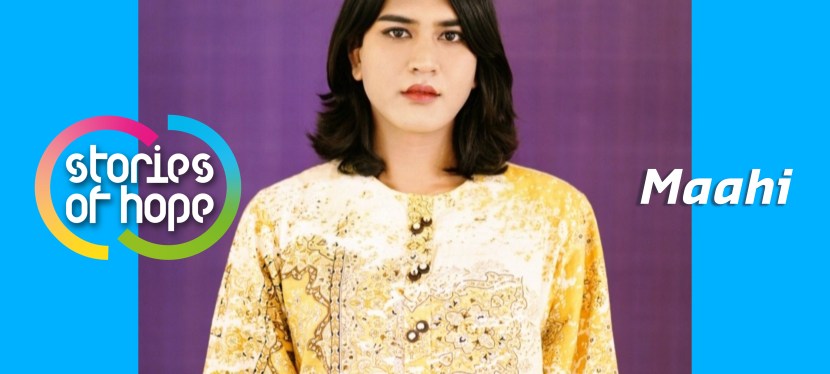
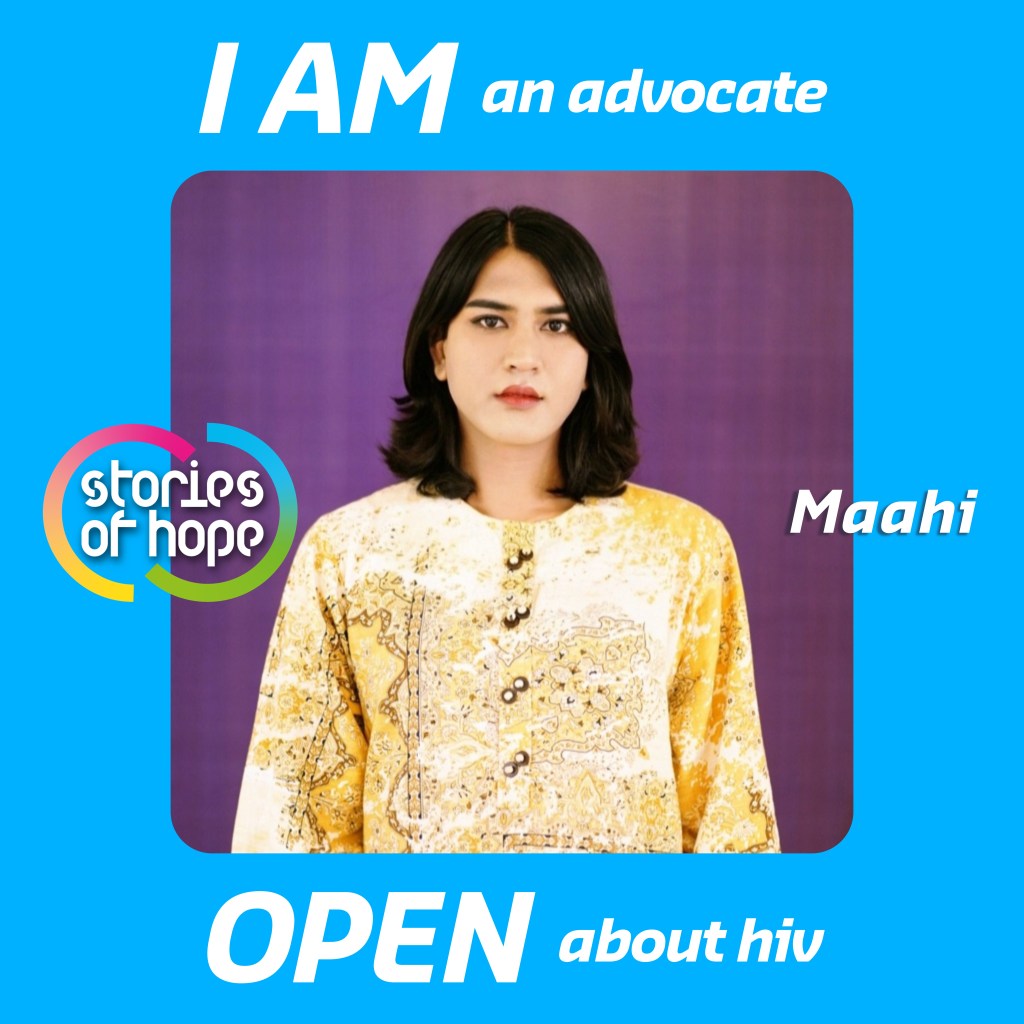
Maahi, a transwoman living with HIV from Pakistan, is the founder of the first trans-led network of People Living with HIV in Pakistan, a brilliant teacher at a transgender school and a global advocate for the rights and well-being of transgender people living with HIV.
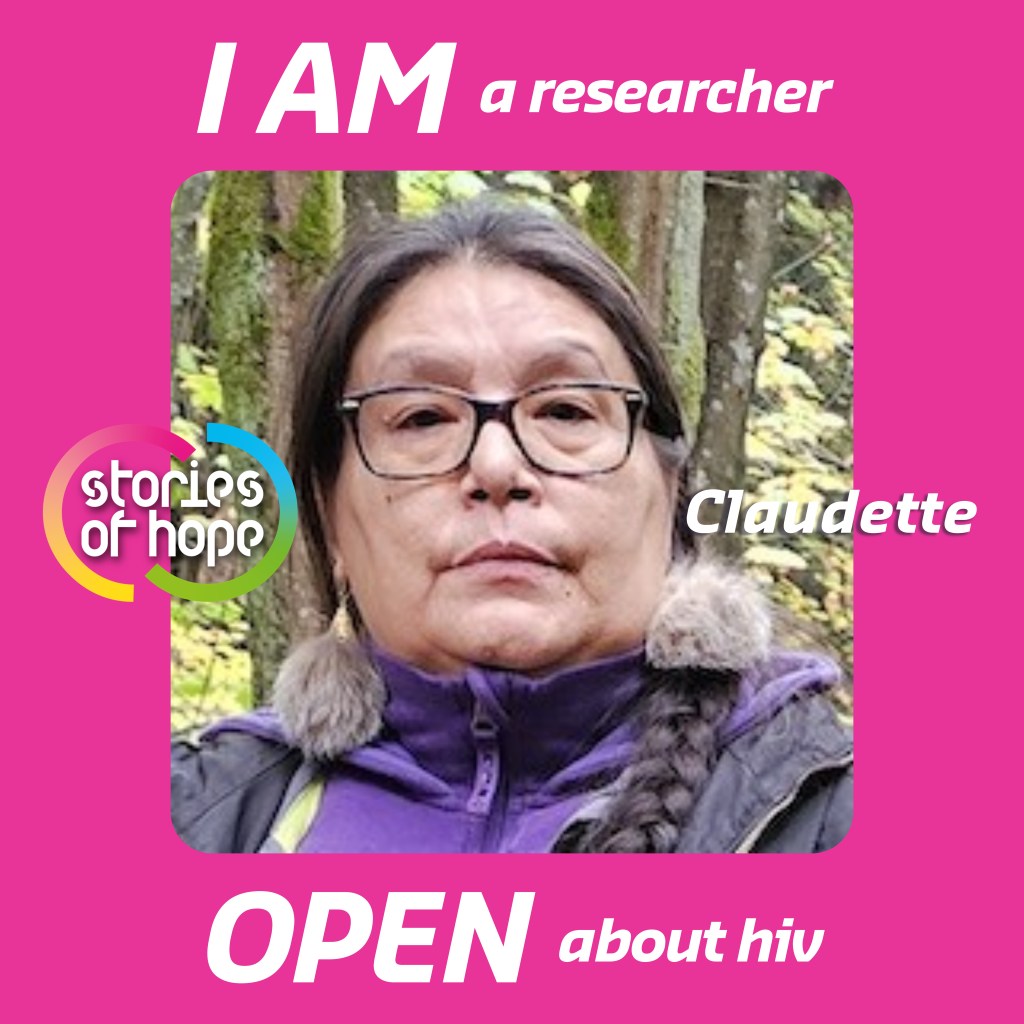
Claudette is an indigenous woman from the Kehewin Cree Nation in Alberta, Canada. During her 30 years of living with HIV, through her work as a wisdom speaker on HIV and indigenous-focused research, she has grown into a leader in HIV action amongst indigenous women in Canada.
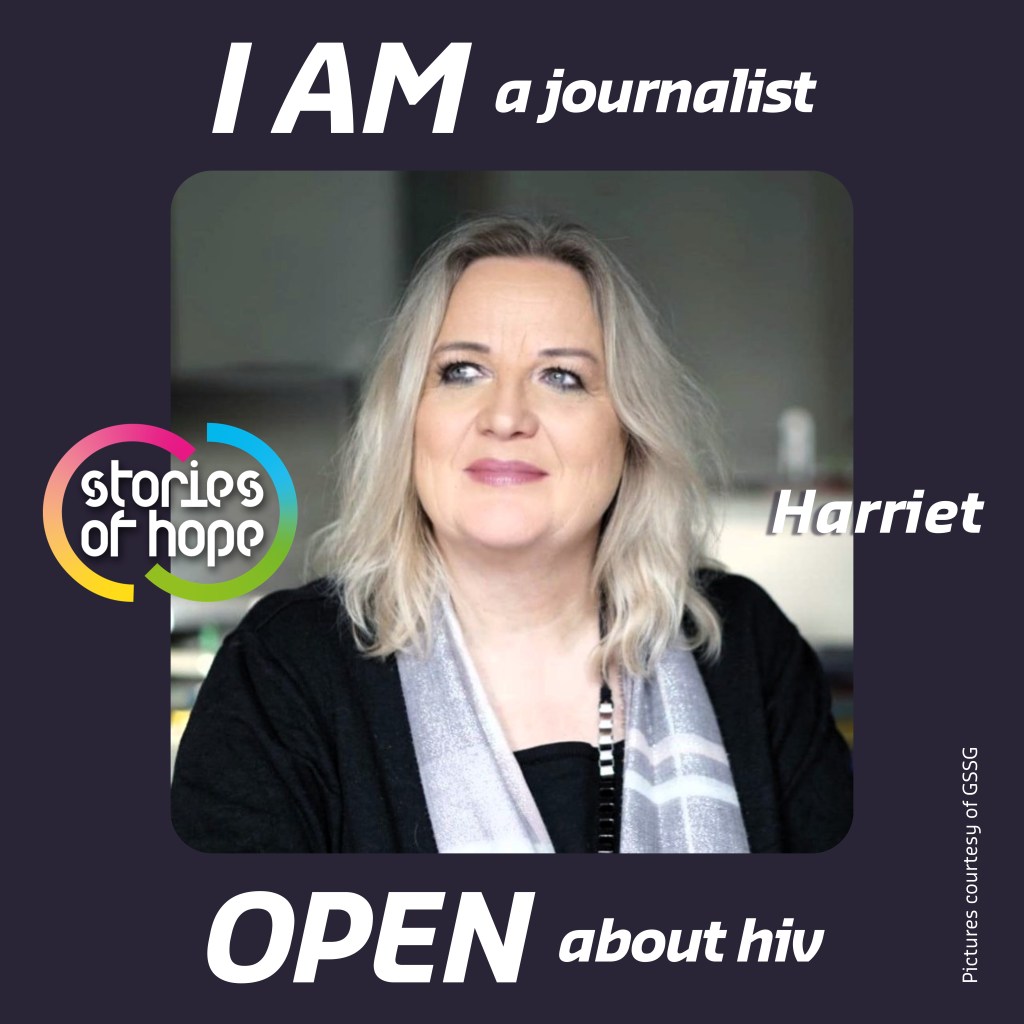
Harriet experienced the devastating impact of HIV and AIDS in the early 1990’s while supporting people living with HIV in Germany. Today, her lived experiences and skills as a journalist and sexologist strengthen her in her fight for the rights of sex workers.
Need I say more? All of our three icons work with so much compassion within their communities, sharing their experiences and efforts at the global stage to inspire all of us to accelerate much needed action to positively impact the lives of women and girls affected by the global HIV epidemic.
I am very glad to call them Heroes of Hope who truly contribute immensely to this year’s theme of accelerating action for women and girls. Let’s support local HIV action to continue bringing positive changes to our HIV communities!
Click on the images above to read their individual Stories or find them and other Heroes of Hope here!
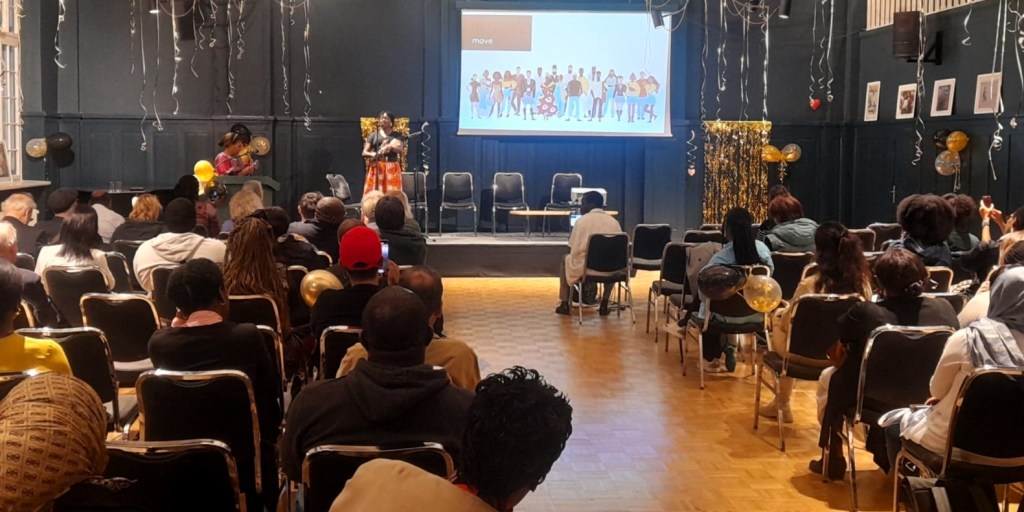
As many of you know, I always like to show my passion of fighting HIV stigma through many different talents. On the 13th of september it was time for me to express myself as a HIV artivist as I was invited to join a very special celebration of ‘Projekt Afrikaherz’ based in Berlin, Germany.
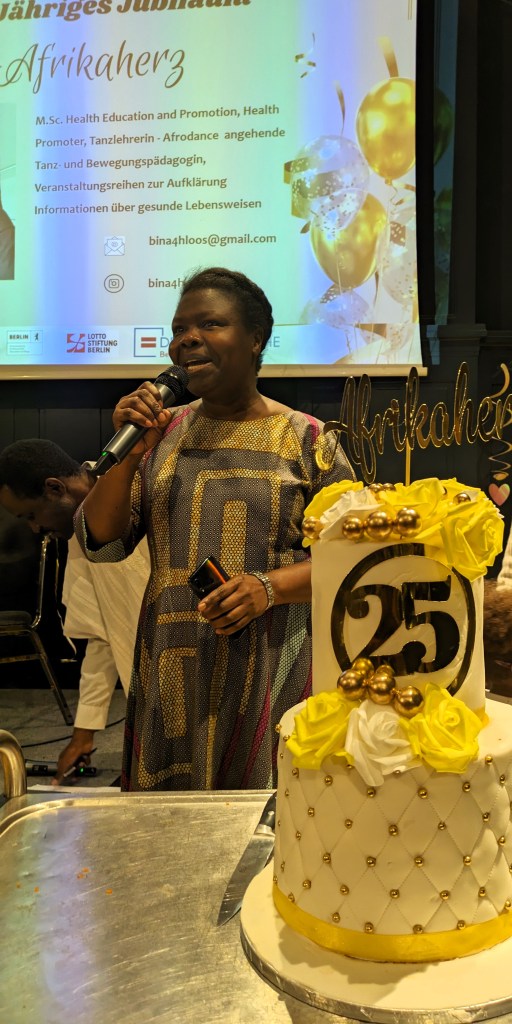
Already for 25 (!) years Afrikaherz (‘African Heart’) is fighting to improve access to health services for African migrants, with a focus on HIV/AIDS as overall there is limited access to health care, especially for migrants without formal residence status.
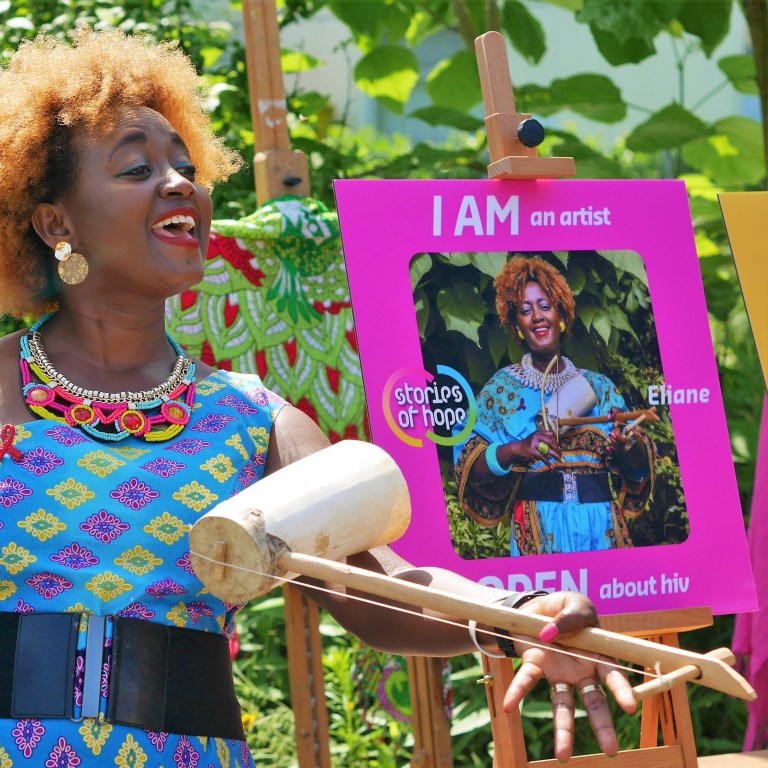
I was excited to meet other people from the African community living in vibrant Berlin and to share my passion for African music making, playing my indonongo instrument, singing and dancing with them. Helping to make sure they have an unforgettable experience so they can recharge in their fight against HIV stigma in their local HIV communities.
There were so many HIV-related issues to cover during this marvelous event. History has shown that when we are fighting for our right, we should not give up so easily, no matter how hard things are. I learned that especially in the beginning Afrikaherz went through a hard time with a lot of rejections and disinterest by the health system in Berlin. However, they persevered and through their hard work and insistence, gradually they were able to create a solid name in health & HIV response, also making sure to address the stigma surrounding those living with or affected by HIV and AIDS.
Listening to testimonies of fellow members of the African community in Europe, I realised that eventually they managed to navigate their journey through the German HIV and healthcare system, even if it took them 25 years to make that journey easier for people with an African background in Berlin. They did not give up! This is a truly great achievement worthy of celebration.
After these speeches I was invited to share my personal experience of living 21 years with HIV. I call this urugendo which means life journey. Those of you that know me longer may have already seen me perform urugendo, it is a fun way for me to share my ups and downs and highlight the work I am doing to improve access to health & HIV care and fighting HIV stigma. By the way, if you don’t know urugendo, contact me, I am happy to perform it for you one day 🙂
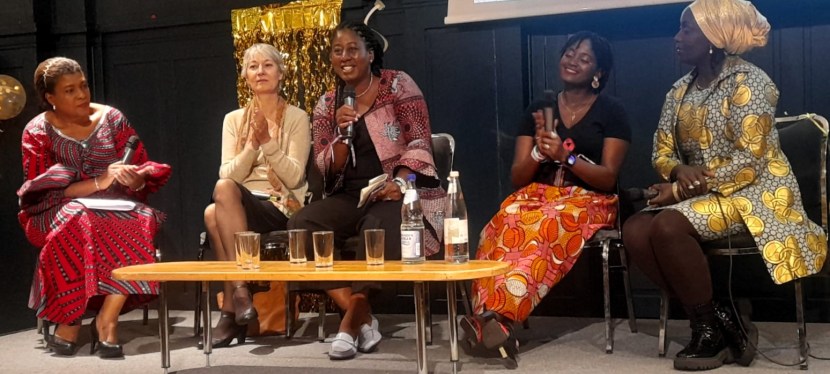
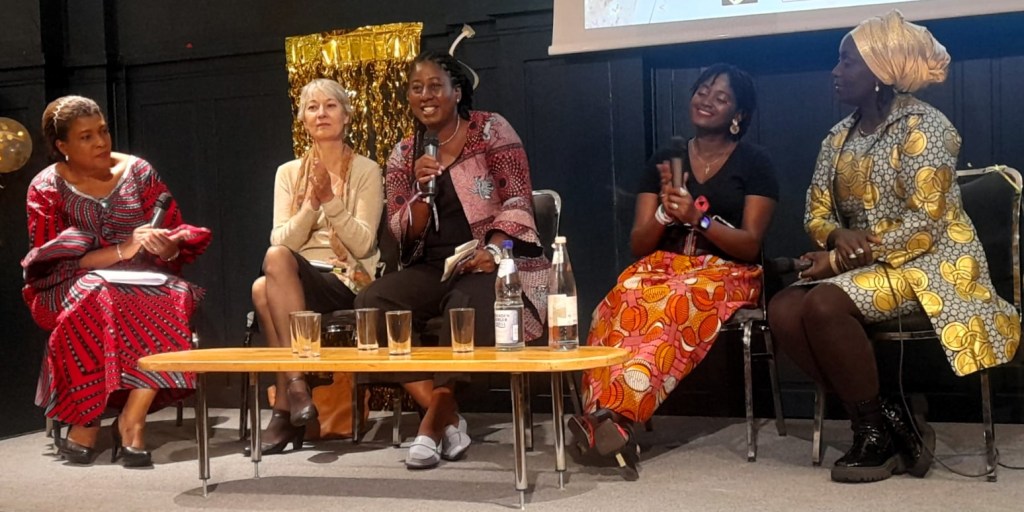
Immediately after my performance I joined the stage for a panel discussion with fellow HIV activist from Germany Lilian Petry from Deutsche Aidshilfe, Elizabeth Beloe from Federal Association of Migrant Organizations and Susanna Kahlefeld from the Green Party. For me a question that intrigued me was the one about the future of Afrikaherz in 10 years from now. My wish for them is to be able to connect even more with other local HIV organisations and health services in other states in Germany, and even reaching out to organisations in surrounding countries such as those in the Netherlands. Because we all know that the African migrant community is very well connected throughout the whole of Europe and the rest of the World. Organisations such as Afrikaherz are essential to bring positive messages to the African community about access to health & HIV care and fighting HIV stigma. And their message will be so much more powerful if it is amplified to people with a migrant background in the other 15 states of Germany, the Netherlands and other countries. Connected we are stronger!
During the course of the event I realised that there is something we still lack a lot both in Germany and the Netherlands and we must address urgently; When we talk about HIV prevention, PrEP awareness and access must also be actively promoted in migrant communities! While here in the Netherlands great work is done by organisations such as PrEPnu, with a particular focus on Men who have Sex with Men (MSM), and while Afrikaherz does promote the use of condoms, African migrant communities are still left behind when it comes to PrEP. The harsh reality is that there are way too few organisations in our HIV community that are actively promoting PrEP access. So, how can African migrant communities know about PrEP? I cannot repeat often enough how important it is that we take more co-ordinated action to ensure PrEP access for key and high-priority populations.
Rosaline M’Bayo
We will not end HIV and AIDS when we continue ignoring African migrant populations in countries such as the Netherlands and Germany. They have equal rights to good healthcare and HIV prevention services while tailored to their specific needs. Please learn from the example that Rosaline M’Bayo and Stephen Amoa from Afrikaherz are setting and make sure they receive the support needed to do their health & HIV outreach for the African migrant community in Germany!
Back to sharing urugendo and some tunes on my indonongo, I got a lot of positive compliments. People told me that my HIV journey and music inspired them, and that I am a powerwoman. Who doesn’t like receiving such beautiful compliments at times? For me the biggest reward was to connect with people from the migrant community and their HIV allies. I am so proud to listen to their inspiring stories to fight HIV stigma.
Through every connection we realise and cherish, we will make our HIV community stronger. Together we will win our fight against HIV and AIDS!
My lovely people, in many cities all over the world we celebrate Pride in August. Pride is an important moment for the LGBTQIA+ Community to express themselves.
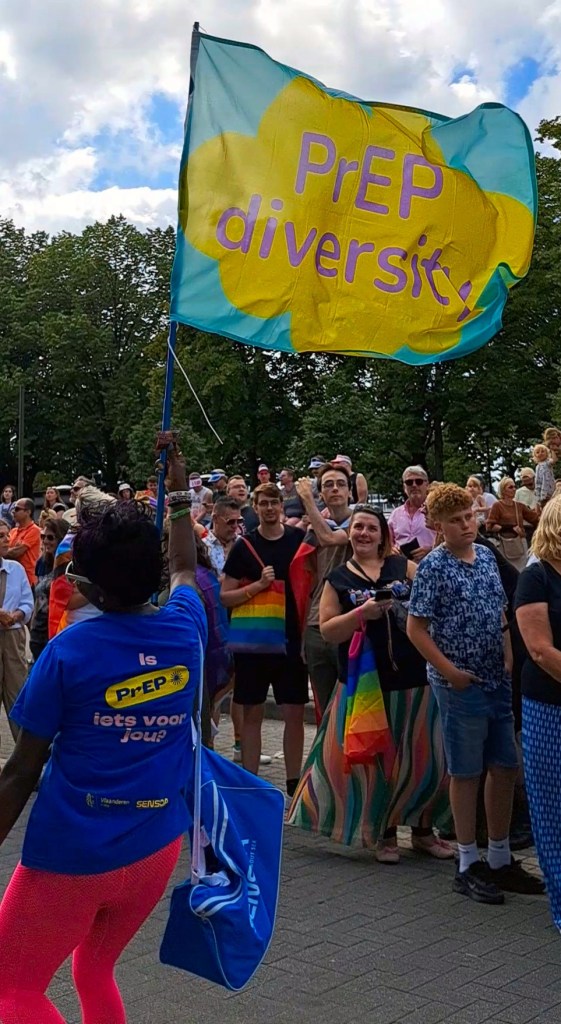
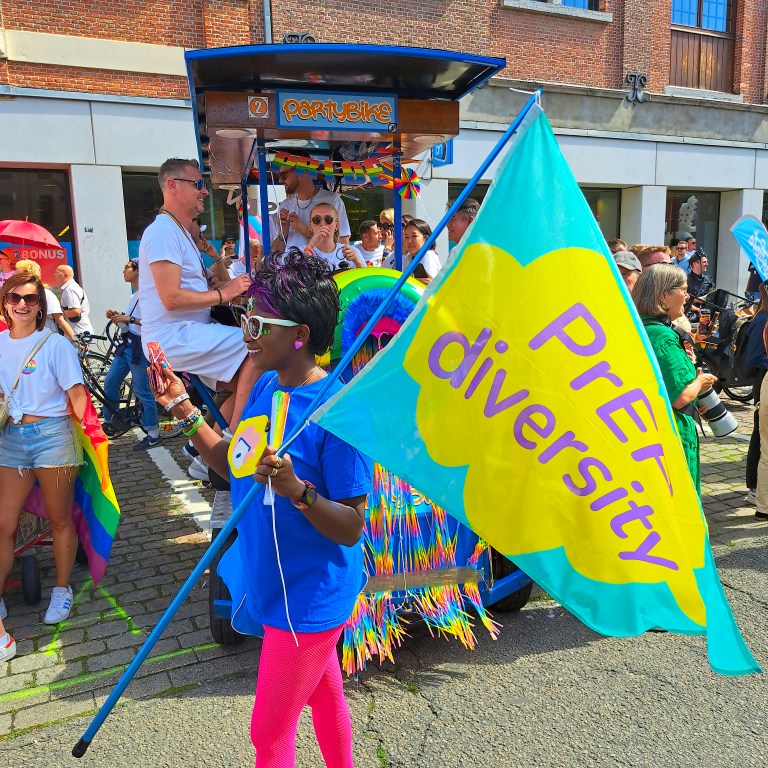
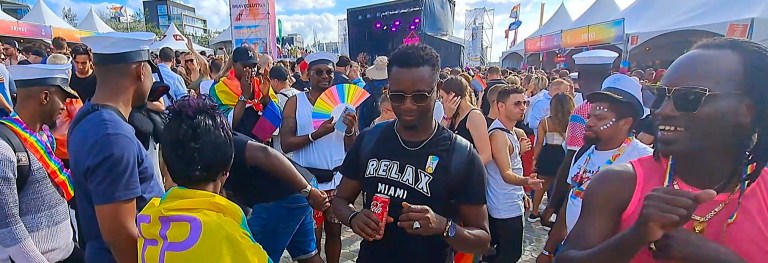
Thanks to an invitation from Sensoa Belgium, I was happily part of Antwerp Pride and contribute to their campaign Is PrEP iets voor jou? (is PrEP something for you?). A key moment was the parade on the 12th of August. I found it very inspirational to join the parade and I also learned that still so many people are not aware or don’t even know about PrEP as a way to prevent someone HIV negative from getting HIV.
During Pride, Antwerp transforms into a brave space where everyone can be who they are within a respectful society. This also means having the courage to stand up and act against stigma and discrimination. Therefore, I was very proud to promote PrEP Diversity. As I pointed out, many people, especially women, with a migrant background are still overseen in stigma reduction and prevention efforts and still do not have equal access to PrEP. I am proud that I contributed to making Antwerp an even braver space by demanding PrEp diversity!
During Antwerp Pride I also celebrated many performances of local artists with so many people who truly felt safe to express themselves in this brave space. It fills me with joy to see them join Pride and be themselves because we manage to create this brave space.
Yet, let’s not forget that many cannot be who they are in their homelands. I wish a brave space would exist anywhere in the world, and not only during one week of Pride each year. A brave space should really not be an event like Christmas, where we wait the whole year to celebrate for a few days and then move on again. We should be able to express ourselves every day!
Frederick Douglass once said “If there is no struggle, there is no progress”, and we should work hard with communities, organisations and governments to promote and protect the human rights of all persons, including the LGBTQIA+ community, without stigma and discrimination.
So let us normalise brave spaces, and the easiest way is to start with yourself by creating a space in your heart to accept and respect each and everyone’s choice to be themselves every day of the year!
Hello my lovely people. Some of us are always counting their age, forgetting to do the things that make them happy. Remember, there is no such thing as putting your life on hold, because we are all ageing, every day!
This may sound weird, but I am always looking forward to ageing. When you cherish your dreams and love your life, ageing should not be your problem. As long as you are happy with yourself! Look at Eric the dragking, never giving a damn about age at all. Who knew I would be the first Dragking to be open about thriving with HIV?
Work with us to THRIVE!
Of course, for many of us living with HIV, it is quite a journey to get to this comfortable place that we all need to live and age healthily. Knowing first-hand how difficult it is and how many barriers we need to break, I have always been very committed as an activist member of the HIV community to share my personal experiences to change my lifestyle to improve my health-related quality of life.
Yes, there are many discussions and workshops on this topic, but how many of us really work together with people living and ageing with HIV instead of for them? So being always full of ideas as an HIV activist and entrepreneur, you may remember that last year I gave a performance called five ways to THRIVE. Well, sending the message through a performance or workshop is not enough!
What if we ask the HIV community directly to share their dreams, what they do to regain trust, and to share their journeys towards staying healthy while ageing with HIV?
Today I would like to share with you that we have indeed started to engage the HIV community to co-design community tools to express our challenges, and share our dreams and ideas to age healthily!
I am so blessed to get a lot of support from friends in the worldwide HIV community to think along, THRIVE is very much alive!
Through THRIVE we, as creative members of the HIV community, want to keep developing useful concepts and share our experiences. But we cannot do this alone and we will need support from our HIV allies to work with us to THRIVE while ageing healthily with HIV.
So, are you curious how you can engage with us? Get in touch and let’s THRIVE together!
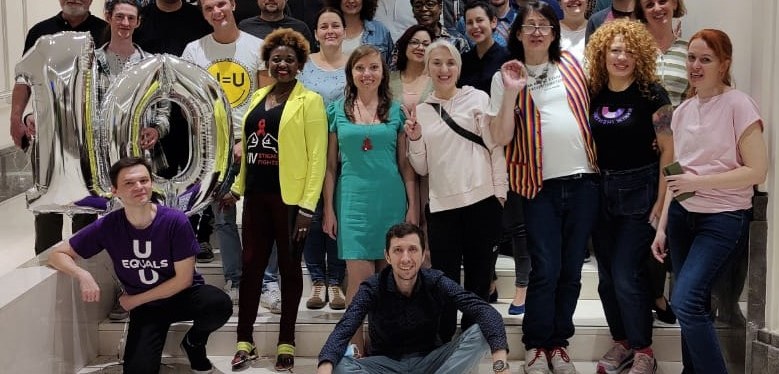
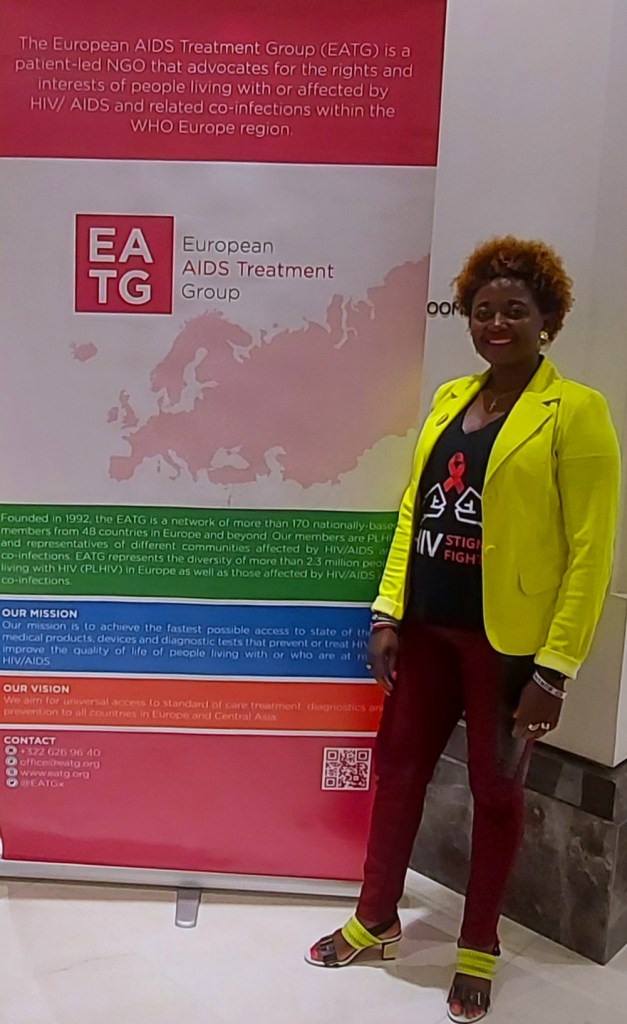
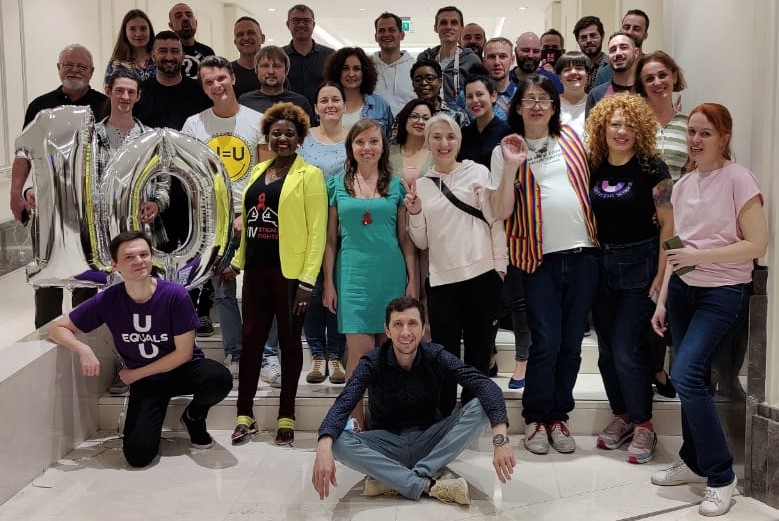
My birthday month, November, had a great start by doing what I like most, giving my HIV activism a boost. Between 4-7 November I was in Istanbul for a face-to-face ‘Skills Training to Empower Patients’ (STEP-UP) and networking weekend organized by the European AIDS Treatment Group (EATG) Training Academy.
After more than a year of online training because of Covid 19, I got a chance to finally meet my fellow European and Asian HIV activists and advocates. Everyone was dying to meet and finally get to know each other more and share our experiences because in the end it is really about community voices. It was quite interesting to experience the difference between zoom meetings and ‘real’ talks together.
As we all came from different parts of Europe and Central Asia we had to speak different languages, so some were speaking English and others Russian. But in the end we all share the same goal and then language barriers can be overcome. While chatting with different people and listening to presentations, I realized that we all share what I call a “Bouquet of problems”; Stigma, discrimination and criminalization.
During the weekend I learnt so many new insights. For example, my friends from Greece and Georgia shared with us that among people using drugs, women are way more stigmatised than men. Or that in some countries mothers living with HIV are still criminalised when breastfeeding and that they are not receiving any support from the health system to obtain baby formula or do medical checks during their breastfeeding period.
Yet, all the new information led me to ask so many questions. For example, why are especially women still so vulnerable to attack and deliberate stigmatision? There are so many new developments and guidelines, for example on breastfeeding, there is U=U, etc. In 2021, women living with hiv should not be criminalised at all. I am telling you, no mother would wish to transmit HIV to her child on purpose!
It shocked me to hear that there are still 130 (!) countries where people living with HIV are injustly criminalised, and in 50 countries we can be prosecuted because they have outdated laws related to sexual, but also on spitting, biting and even breastfeeding. People, after 40 years of HIV/AIDS, instead of being stigmatised we must focus our fight on removing inequalities and to demand the right to access HIV treatment and receive good medical care.
Our training was epic, there was no taboo, we talked about many topics and received useful tools that we can use in our communities. It feels like I have known this group for such a long time as we shared so many laughs, jokes and fun. It made me wonder what more we could have achieved if we could have done all sessions face-to-face instead of via zoom. I gained so many friends, which is fantastic. These moments of togetherness bring back humanity to our lives.
By Sunday, we all went back home empowered with knowledge that we will share with our community and use to convince our decision-makers and politicians to DECRIMINALISE people living with HIV!
Thank you EATG for organising the STEP-UP training and making this such an inspiring weekend, we shall meet again my Activist Friends. Keep up the fight, we are on the winning side since we DARE to speak up about our bouquet of problems!



 HIV stigmafighter