Lead the noise

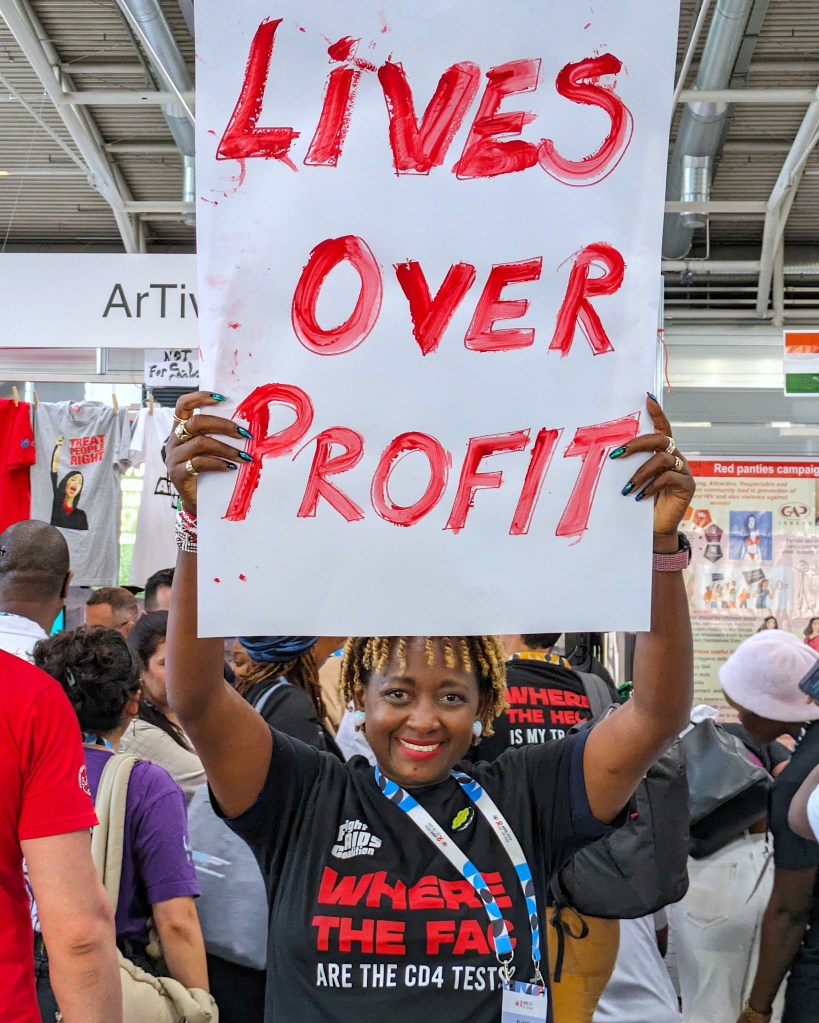
My lovely people, I promised to share my learning from AIDS 2024 in Munich with you. The two days I spent at the Global Village were quite fruitful as an activist. I decided to go where the noise is this time as it keeps me alive, being together with HIV activists and sharing the concerns of the global HIV community. It has been a fight for 40 years now and HIV activists have been always at the front.

Before making noise, let’s start with the AIDS 2024 theme “Put People First”. I asked myself many times who decides which people to put first? During AIDS 2022 in Montreal and now also at AIDS 2024 in Munich, I literally experienced a barrier between the accessible to all Global Village, thriving with activists and grassroots organisations, and the paid-for conference space full of big Pharma, scientist and policy-makers. In all, there is very limited interaction as most of us cannot enter the conference space and ‘they’ show little interest in meaningful engagement at the Global Village. How can “Put people first” as a slogan work if we already have two faces to AIDS 2024?

Now let’s make some noise!

The global North-South divide

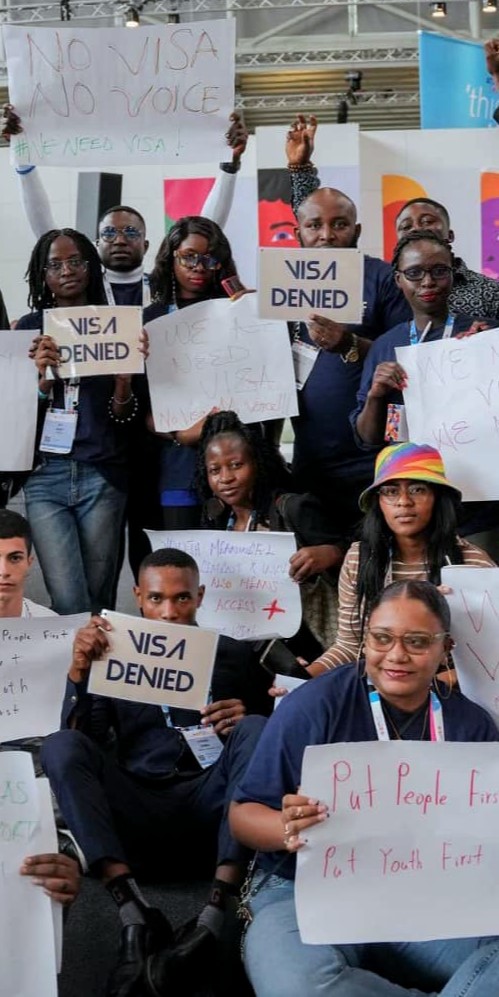
In her speech, UNAIDS Executive Director Winnie Byanyima highlighted the importance of community involvement, especially women and girls, in ending HIV and AIDS. She also regretted the missed opportunities to bring in HIV communities from all over the World, especially since many people representing the Global South continue to face dicrimination by being denied visa to join AIDS 2024. It seems that IAS did not learn from the Montreal debacle and is unwilling to bring about change by making sure conferences are organised in places where representatives from the Global South will not face visa issues.

Credits: Y+Global

Can I ask why IAS and UNAIDS are not taking serious action? How long will the HIV communities in the Global South continue to suffer? Do they realise the mental stress and pain they give to participants when they receive the bad news of visa denial? Are they taking contributions of the Global South on fighting HIV and AIDS in their communities seriously?

Coming back to the theme “Put people First”, in my experience, first and foremost, these organisations are putting themselves and their sponsors first. So, let’s be honest and just say “Put ourselves first”, the Global South comes second. So next time, let HIV communities from the Global south decide where the conference should be held, because remember, big pharma, scientists and policy-makers will not be able to shine without us, the HIV community. They should let us lead! This is why I like the World AIDS day 2023 theme “Let communities lead” so much better.
Women warriors

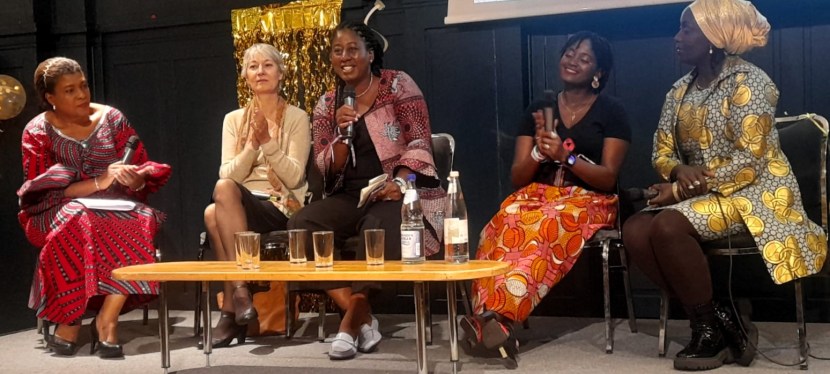
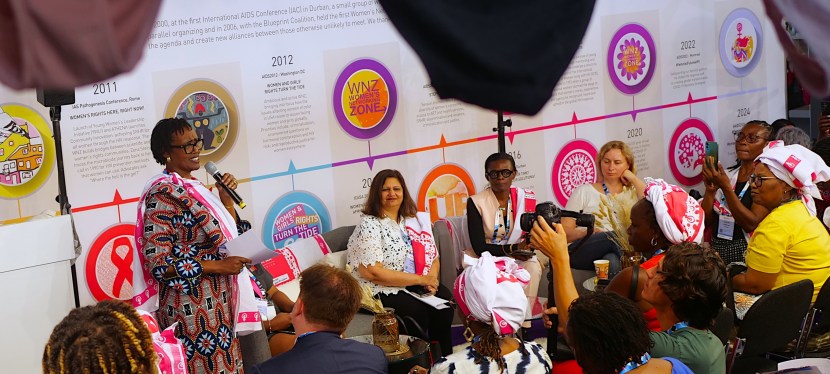
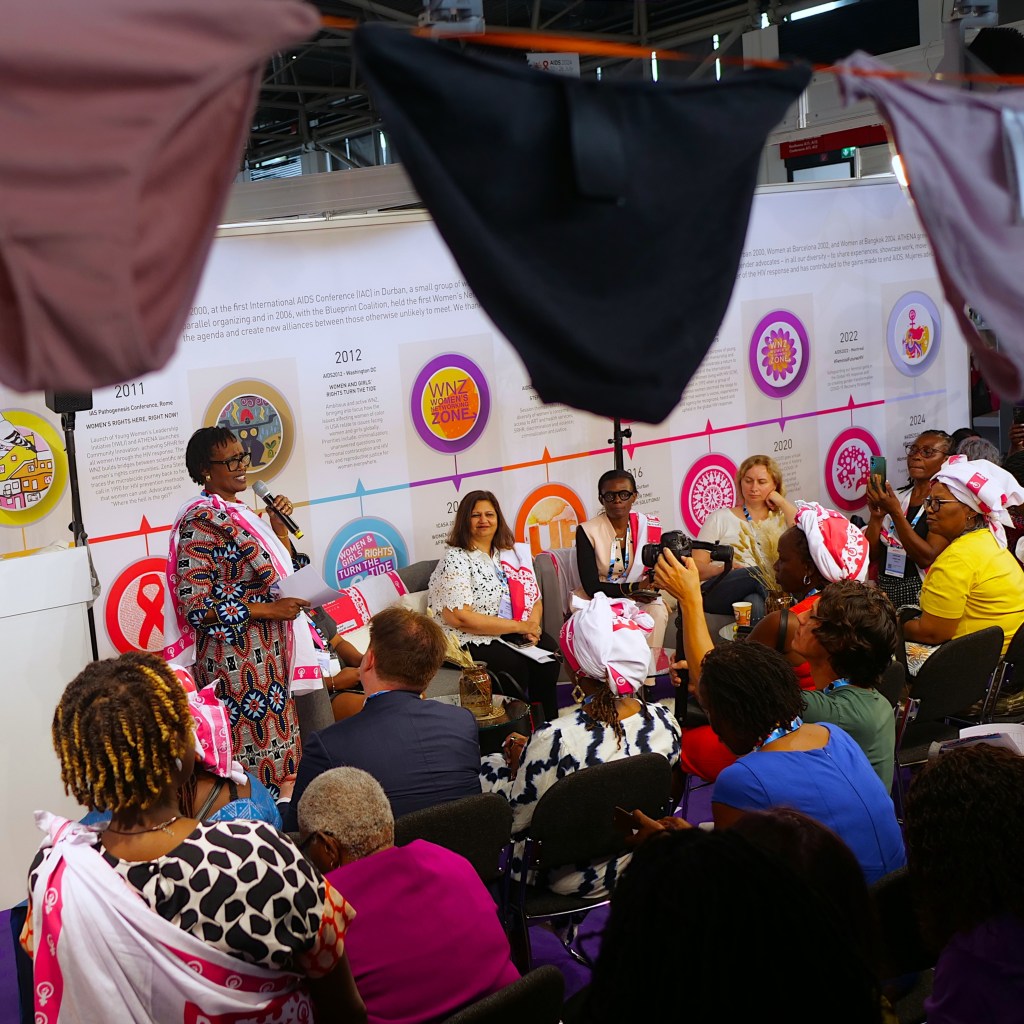
In the end, there are always many booths in the Global villages, some where very sleepy and not engaging at all, and then there were the noisy ones! Take International Community of Women for example. They were really on fire, demanding that women movements are supported, fighting for gender equality and human rights, recognising that women bear the brunt of HIV stigma and discrimination. We chanted repeatedly “we are ready”! For what? For being empowered in discussions and decision-making, for sharing power, for funding women-led HIV programming! Our existence matters and we need to be included as we cannot win the fight to end HIV and AIDS without women empowerment.
Making noise at ICW

The other inspiring noise was with the Red Umbrella Fund,  a sex worker-led participatory fund. As our support to sex-workers in Burundi also highlights, HIV response is incomplete without support to sex-workers. At AIDS 2024, sex-workers and their HIV allies demanded long-term financial support to excercise their work in dignity. So we chanted “Sex work is work”, “Decriminalize sex work NOW!” Yes, we should put sex-worker communities first, they are the ones who deserve our attention the most! De-criminalizing their work and supporting them with access to HIV awareness and services will make a huge impact on our challenge to end the HIV and AIDS pandemic.

Greedy Pharma

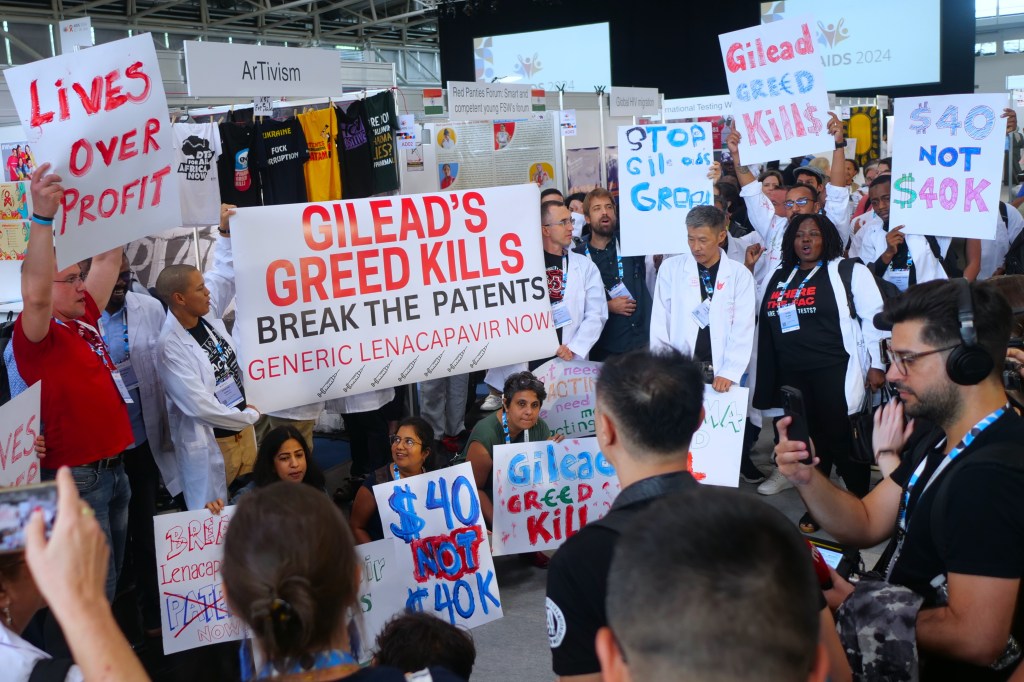
On the other side of the huge AIDS 2024 space, shielded from the Global Village by guards who check if you have an exclusive conference badge, it seems that at every AIDS conference big Pharma devises a reason to celebrate so-called “ground-breaking news”. This time the buzz was around a miracle prevention tool called lenacapavir, a twice-yearly injectable for HIV prevention. Sounds like a perfect PrEP tool, right?

Then why is this not celebrated at the Global Village as ground-breaking news? Is it because we all have powerful stories to remind us that there are still people dying of AIDS every day? Or because we know that there are still millions people living with HIV who cannot afford HIV treatment? Or because we are concerned that there are still over one million new HIV infections each year?

Yes, and… It hurts to know that for many years we already have effective HIV treatment and that we now have PrEP as an effective way to prevent new HIV infections from happening, but we also know that big Pharma is still interested in making as much money of the HIV community as possible. Who can afford 40,000 euros (!) each year for lenacapavir? While it only costs less than 40 euros to make? No wonder we have to stand up, break the conference barrier, and shout “Shame, shame. Access for all!”

When entering AIDS 2024 you are welcomed by colourful big Pharma banners with sentences like “We won’t stop until we end HIV and AIDS”. Do you really want to end it? Then remember this; the HIV virus is not going to sleep and more people get infected and will die unnecessarily while you continue making money. AIDS 2024 is a place where you come to shine, not to pretend you care about the HIV community while you forget that without us you won’t shine at all. Don’t forget that you owe us big time, start reducing the damn price and let everyone have access to HIV treatment and prevention!

We will continue making noise until you will finally hear our cry! Please, do not let the HIV community down and take action now!

Peace,

Eliane

Growing stronger together

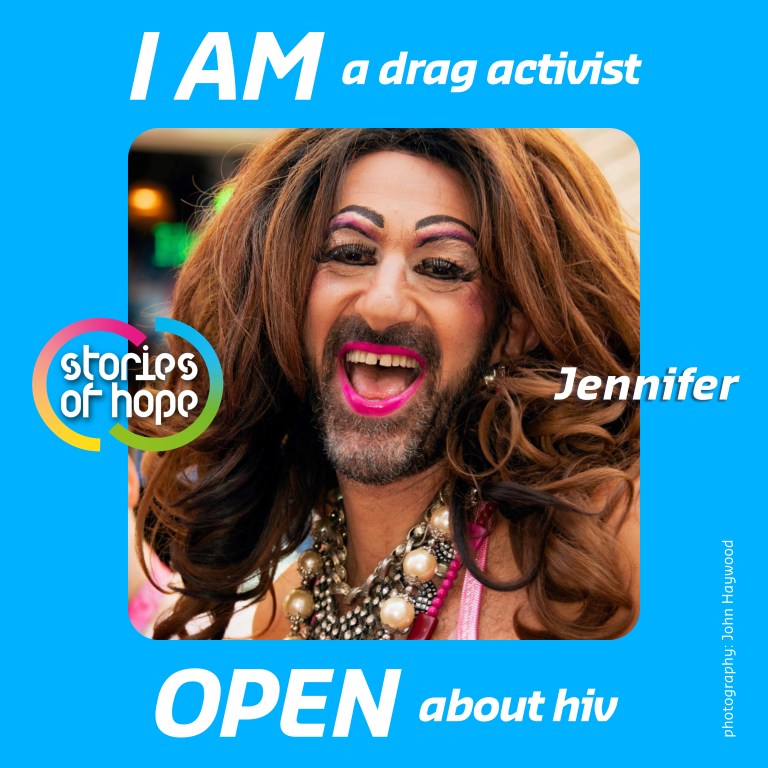
Since last year’s Mandela day, which is always on the 18th of July, STORIES OF HOPE includes portraits about our dear allies of PLWH in recognition of their contribution to ending HIV and AIDS. In August 2023, Jennifer Hopelezz, a truly remarkable HIV drag activist and ally, was induced into the Heroes of Hope gallery.

Almost one year later, while eagerly anticipating the start of AIDS 2024 in Munich on 22 July, we will be looking forward with Jennifer to AIDS 2024 and give her the honour to introduce our newest Hero of Hope who happens to be Jennifer’s family!

Jennifer; when you hear AIDS 2024’s theme ‘putting people first’, what does this really mean for you?

“Well to me, it’s a little bit too obvious because of course that’s what you expect, people first before profits and organizations and businesses. But sometimes that seems to get lost and it all seems about the whole infrastructure around HIV/AIDS that has been built up over the last 40 years.”

Jennifer, from your perspective, what do you think should change to ensure that community-based organisations are empowered to apply a ‘people first’ approach to their HIV response?

“I am always surprised at how little feedback is asked of us as a community group – but also as business owner with sex-on- premise venues. We have a whole heap of experience and information that is not tapped into. We have a totally different perspective to the government organizations, and we also have a certain freedom they don’t have as we are an independent voluntary group.”

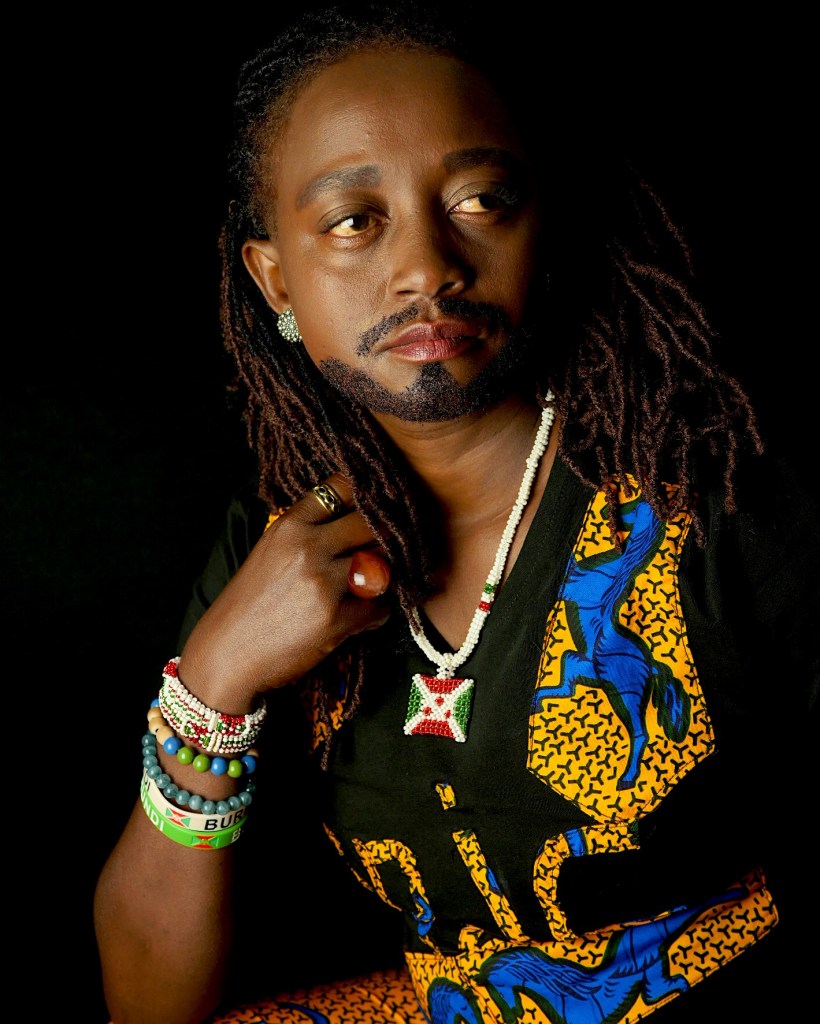
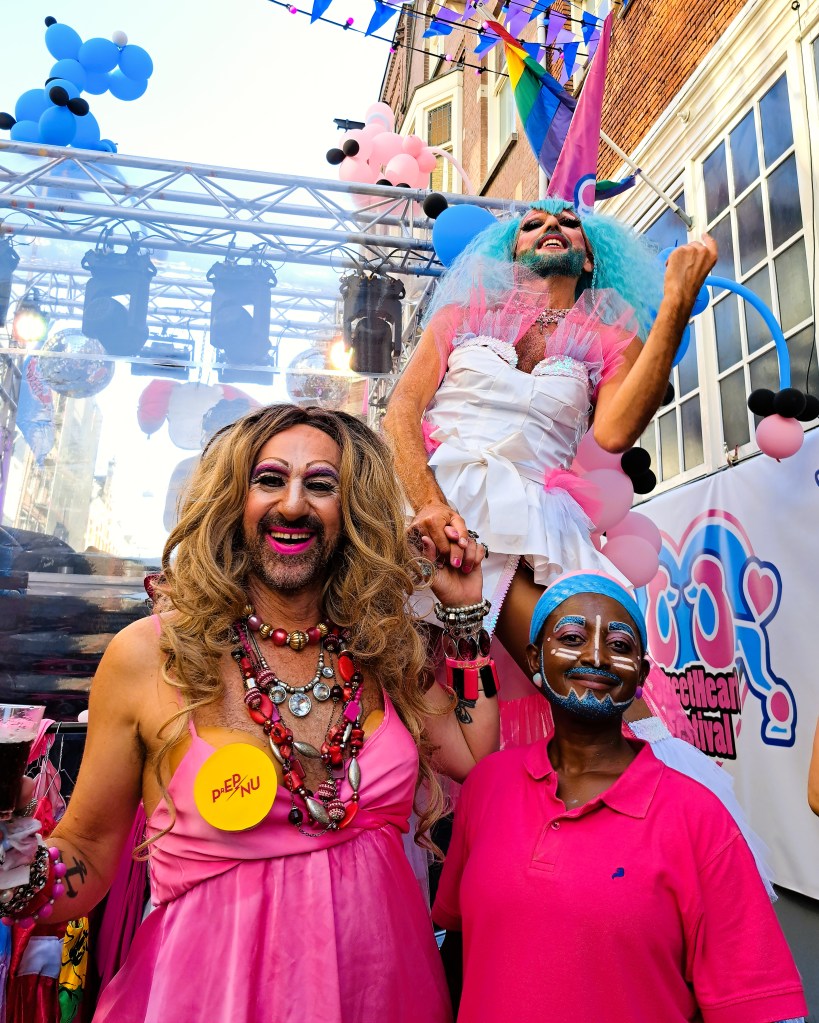
Jennifer, you are the mother superior of a large drag family in the Netherlands. To celebrate diversity in the wonderful world of drag, in 2019 you added a new drag house to your family, called Lost Bois. One of your family members is Eric the Dragking. Could you introduce Eric in a few words?

“Eric personifies what our houses stand for. Using the power of drag as a tool of activism, to use the attention you get as a drag performer to get your message across. Because you surely get much more attention when you are in drag! Sex positivity, HIV and AIDS, fighting discrimination-these are really core values of our drag houses and that is what Eric is also about! (He also happens to be one of the  best looking kids I have, haha, don’t tell the others!)” 

Eric, so nice to meet you and such an inspiring Story of Hope! Why did you decide to do drag and what is your link with the HIV community?

“I decided to perform drag because drag is another powerful way for me to fight stigma and discrimination, and bring change to people and communities. I am living with HIV for 20 years and I know what is like to be stigmatized or discriminated. As Eric the Dragking I can also contribute positively to reducing HIV stigma and improving PrEP awareness in the Queer community.”

Eric, how do you connect your HIV activism with your drag performances?

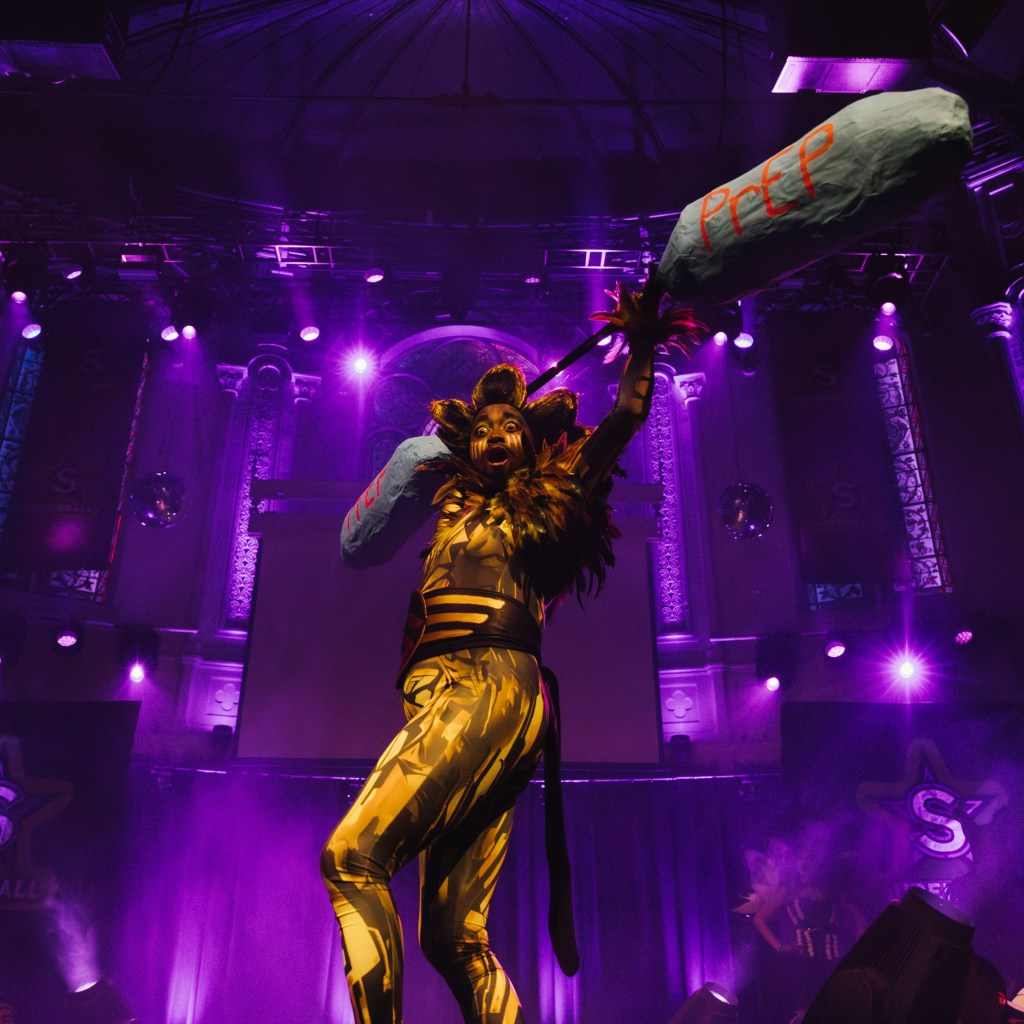
“I combine my HIV activism with my drag during my performance where I always make sure to be Stomping HIV stigma away. This means that on stage I will be bringing messages of hope for PLWHIV whilst also raising awareness on HIV stigma and access to health services. If together we want to end HIV and AIDS, everyone should know about access to HIV services and prevention and claim it as their right. I like being on stage with artifacts to amplify my HIV activism, it makes people curious and this is a great way to start a positive conversation on HIV.”

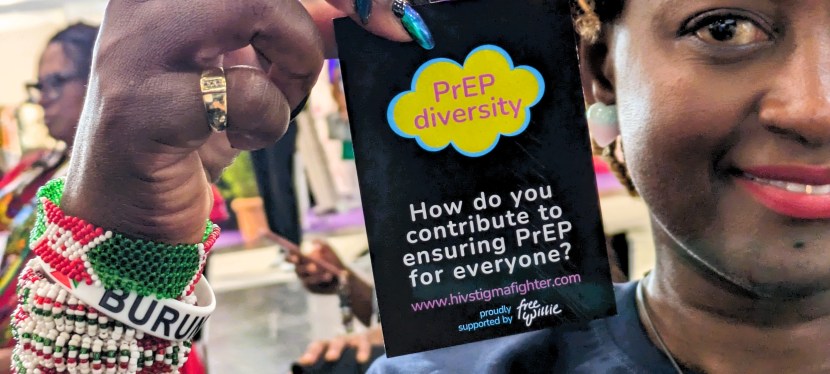
PrEP diversity

 Jennifer, as a drag activist you are also strongly advocating for PrEP availability and access. How do you contribute to PrEP diversity and what do you think are the key priorities right now?

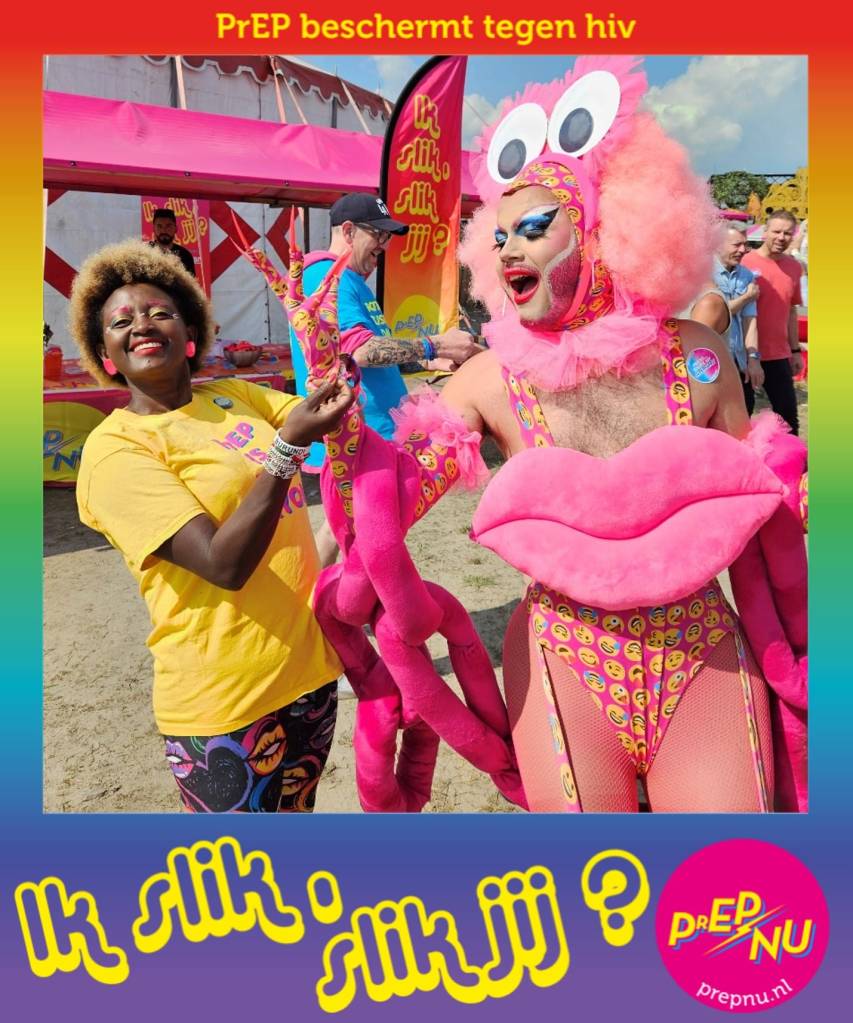
“We really need to open our focus from not only cis gay men but to women, transgender people and immigrants. That’s why we are so happy that Eric has joined the PrEPNu outreach team because he knows how to reach these other groups that we don’t. All our networking and all our knowledge is based around the gay scene, especially in Amsterdam. But if we are to end HIV and AIDS, then we need to step out of our bubble and reach these other groups as well.”

Jennifer Hopelezz and Eric the Dragking

 So Eric, you will be joining AIDS 2024 in Munich, Germany. What will be your key message there?

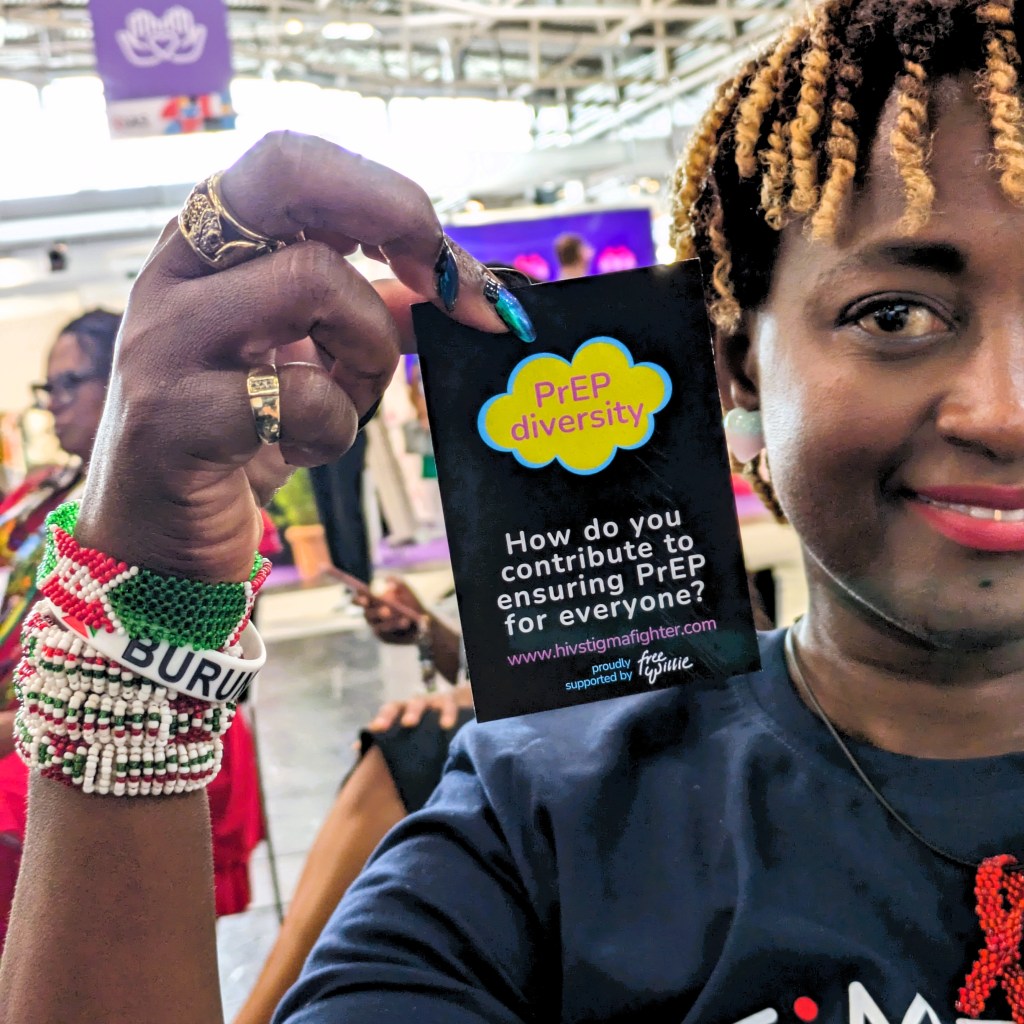
“During AIDS 2024 you will find me mainly at the Global village, this is where the global HIV community will be meeting and I am hoping to see a lot of my fellow grassroot HIV allies. My main message will be to share the importance of PrEP Diversity. We should always remember that HIV does not care about gender, sexual orientation or ethnic background. PrEP is designed to prevent against HIV for everyone. I am confident that we can end new infections if we make sure to enable access to PrEP for those who need it. That is why #PrEPdiversity is very necessary.”

Eric, following Jennifer’s Story of Hope last year, you feature in this Story of Hope. How important is this for you?

“I am very grateful to be given this opportunity. In 2021, when Stories of Hope was launched, I shared that I was the first Burundian female to play the Indonongo here in Europe. Back then, Eric was not out of the closet yet. I realise that talent is like champagne, it cannot be bottled up, it has to released to be shared and enjoyed fullest. So today I am so proud to share Eric’s talent, the first Burundian and Dutch Dragking living with HIV and open about it. I hope that my HIV dragtivism will be an inspiration for PLWHIV who are still in the closet and also to serve as an example for those who think that life is over after an HIV diagnosis. I am living proof that HIV will never take away your talent!”

Stories of Hope

Let us please welcome Eric the Dragking to our community of Heroes of Hope. You can find Eric’s story here!

Are you talented and never let HIV stigma stand in your way? We are looking for talents to share their experience during World AIDS day on the 1st of December 2024.

Get in touch if you would like to share your story with the global HIV community!

The journey to end HIV and AIDS

My lovely people, how have you been?

I have been visiting Japan and Korea over the past 5 weeks. That is why you haven’t heard from me. I would like to share my learning from those two countries. Whether I go on holidays or to conferences in other countries, I am always interested to learn the culture, the history and curious about how the local HIV community is doing and connect with them.

My curiosity is mostly on what or how they are doing to fight HIV stigma. Is there any prevention in places, are migrants being helped or do they seek any help, is there PrEP awareness and is it available  to anyone, is ‘Undetectable is untransmittable’ (U=U) known to the HIV community and public and are healthcare professionals empowering patients with knowledge of U=U? All these questions always come to my mind, and I make sure I search for answers by connecting with locals’ organizations and HIV activists.

Please bear with me, this is probably the longest post ever, but it is going to be interesting, I promise!

OSAKA

My first stop was Osaka in Japan. Before my travel I connected with Daisuke Fukusho, the only Japanese person open about living with HIV so far. He connected me to an organisation based in Osaka called Dista, a community center to learn and exchange about health, HIV and other sexually transmittable conditions. It was very inspiring to see what the community does for Queer people in and around Osaka. Dista is a very safe places where volunteers and the Queer community, including people Living with HIV, come and meet up for chats, movies or drinks. You cannot know who is living with HIV, people are not open.

With Chef Niji at Dista

I really enjoyed my encouter with Niji Sabou, a Chef cook from neighbouring Kobe. He organizes the social event I visited to help people living with HIV to meet and have social contacts. As an excellent host, he prepared a Sake collection and some good food and served this to the people to generate talks in a very informal way. Niji is organising these kind of events at Dista with a little support from the Kobe Municipality. This is already such a big help to fight loneliness and create a culture of understanding. I found this such a beauiful way of how allies of the local HIV community provide help to us, thank you Niji for a memorable experience!

I noticed that at Dista, none of those we met is open about their HIV status. To me this signals that HIV stigma still has a huge impact in Japan. Even for leaflets on U=U they would still use a modeling agency to find beautiful models to help them in the campaign. And while inform on PrEP is available through a beautiful leaflet, it still focuses on Men having Sex with Men (MSM), women are not yet mentioned. PrEP as an effective prevention approach has not yet been brought to scale; There is only one specific doctor who deals with the PrEP users, the Japanese government is still in the approval stage on PrEp. So in reality PrEP is still only used by people who can afford it and dare to approach the doctor for an appointment.

When I asked about how migrants are part of HIV prevention and how they reach organisations such as Dista, I was actually told that there are still a lot of issues to connect to them such as language barriers, affordability of PrEP and HIV care, etc.  Still a lot of fights to win! The good thing is that by only talking to my new friends at Dista, where they confirmed they have never really considered engaging with the migrant community and that they found this a good idea, I do believe I have planted that first seed of the importance of reaching out the migrants as well as increasing PrEP awareness. Thanks you for your hospitality Dista!

TOKYO

The week after I was in Tokyo where I finally meet my comrade in fighting HIV stigma in Japan. Daisuke invited me to Akta, another community center. From here Daisuke does most of his HIV activism. I guess there is an advantage in being open about his status as he can then connect with the local and global HIV community.

My curiosity of how things are organised at Akta was the same as in Osaka. Here also, overcoming HIV Stigma is a major obstacle as there are virtually no people that want to open up about their HIV status. When I asked Daisuke what his drive is, he responded “To keep on fighting HIV stigma, I was encouraged by you”. I felt very honoured and proud to see how what I stand for, fighting HIV stigma, got me to connect with such a strong and motivated activist on the other side of the world!

At Akta, Tokyo, with Daisuke

I had so many questions when we started our discussion on how the Akta community centers work. They agreed that HIV stigma is there and they still do not yet have a proper way to fight it since everyone is still in the closet. Also, a lot of the materials I got in Osaka is there and more, like folders with beautiful anime which they use for their campaigns. When it comes to U=U, the materials mostly target MSM. And again on none of the materials people Living with HIV are featured. This is a real set-back as I believe a message on HIV stigma and prevention becomes so much more powerful if PLHIV such as Daisuke could feature in it instead of hired models. As in Osaka, women are not yet in the picture when it comes to HIV stigma and prevention, despite the great will of organisations such as Akta.

Daisuke confirmed that the government is not yet ready to scale through more open campaigns on important prevention programmes around U=U and PrEP. I mentioned to Akta that without  this mix of stigma reduction, U=U and PrEP, we can forget about ending HIV and AIDS in 2030. I also shared with them some initiatives on tackling HIV stigma, for example Stories of hope, and how Eric the Dragking raises awareness on PrEP diversity. We conclude that it’s up to us to bring the change in our HIV community, and that without ending HIV stigma there is no ending HIV and AIDS. They are going to work hard to bring these changes. I am proud to be their inspiration and enjoyed Akta’s wonderful reception a lot!

Thanks to Teddy who helped us with translation!

SEOUL

Korea is a vibrant country! Staying in Busan and magical Jeju island before heading to Seoul, gave me an opportunity to switch from my beautiful Japan experience to soaking in Korean culture, food, nature, and social events. And it also helped me to practice to learn a little more Korean before meeting the Seoul HIV community. And just like in Japan, being able to speak a few words, make a little joke in the local language, really helped me to break the ice and light up the room.

My first day in Seoul was already very special as I arrived on the 1st of june which was the day the Gay Pride was organised. Despite some resistance from Seoul authorities, the queer community did manage to organise a beautiful parade and invite a lot of organisation to show what they are doing within the Queer community. While there were some organisations focusing on HIV, mainly around testing and condom use, none of the 60+ booths had information on PrEP available. That was quite an eye opener to me.

Before even traveling to Korea, I already connected with the amazing Jay who is a HIV activist and also an artist and singer. For him it was very important that once in Seoul for me to try and meet many HIV activists and Korean HIV organizations. So through him I got to know Tari. My first encounter in Seoul with Tari was at a Queer community party which was part of Seoul’s Pride celebrations. And this was a very unique party organised by ChinguSai (Korean Gay Men’s Human Rights Group) who really made a legendary effort to organise a queer party open to all genders. I decided to introduce Eric the Dragking here and we had a truly amazing evening.

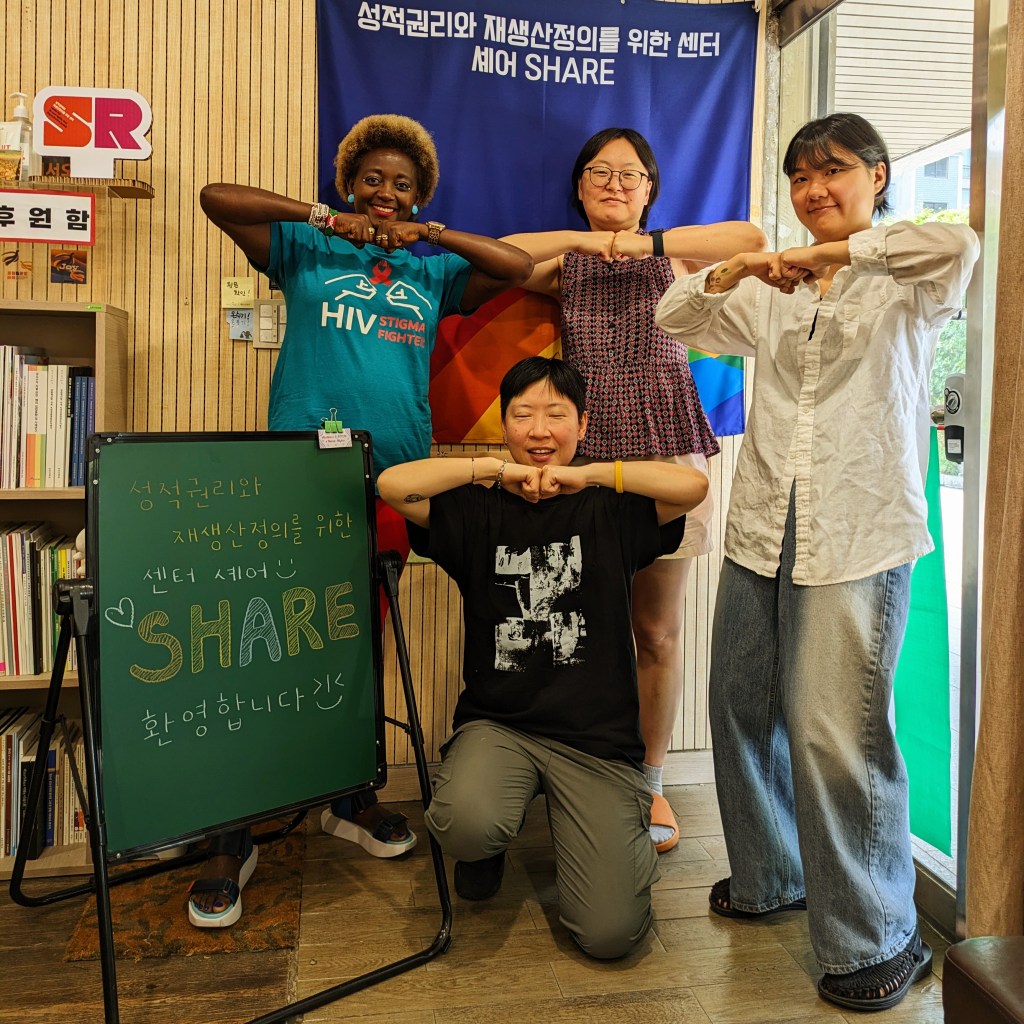
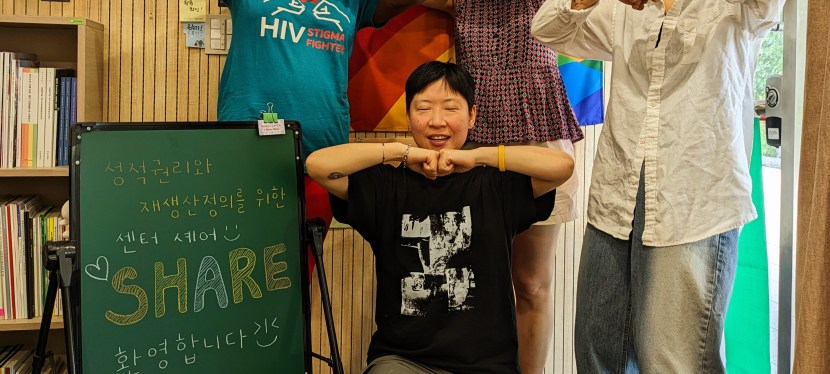
Proudly posing with the SHARE team

A few days later I met Tari again, together with her colleague Na Young, at SHARE “Center for Sexual right And Reproductive JusticE” where I was invited to share work experiences between our organisations. I noticed that we had so many priorities in common; Fighting HIV stigma, discrimination and criminalization, education on HIV and Prevention and fighting HIV injustice. SHARE is very committed to sexual reproductive health, health-related reseach, training and education on sexual right, and supporting women and girls on abortion.

In the end we had a lot of fruitful discussions on how the local HIV community can be empowered to lead. They stressed the need for the Korean government to change their strategies and discuss with grassroots organisations working on health and HIV about what they need and help them to break the inequality that exist between women and men. SHARE also particularly supports sex workers to seeking their right to do their work. Especially this part of the key population are being criminalized and put in harm because of their work. I agreed that this is similar to what I have seen in Burundi where sexworkers are often underprivileged. In solidarity I shared a supportive video message of courage and to cheer up the Sexworkers who are being forced to be removed by local government.

A highlight of my time in Seoul was a joint meeting with five organisations, including SHARE, Chingusai, Haengseongin which is a Solidarity group for LGBT Human Rights of Korea, Action-al which is a HIV /AIDS Human Rights organisation, and KNP+ Korean Network of People Living with HIV and AIDS.

Sharing my HIV life joruney with the Korean HIV community

First of all, I was able to share my HIV journey with those organisations and some keys messages on how we fight HIV stigma, work on HIV and ageing and contribute to PrEP awareness . I am very grateful that I was allowed to share my experiences! To the different organisations I had the same question related to PrEP and, similar to Japan, since the government is still in the approval process for PrEP to be known as a public health tool to prevent HIV, right now PrEP is only given to partners of people living with HIV. I shared with them that this breaks my heart as PrEP is not needed if a partner living with HIV is undetectable. To me this shows so much how U=U and PrEP access as important tools and stigma destroyers are still not being used effectively.

I wonder, how long are U=U and PrEP access going to be unused? Why governments and healthcare providers cannot make progress on this and start sharing this important message? There will not be zero new HIV cases  by 2030 without U=U and PrEP!

At end of our meeting, I was excited to learn who I could meet again in Munich at AIDS2024. I was shocked to learn that none of these 5 organisations, like the 2 I visited in Japan, will be present there! I know from my experiences that going to these type of events as an activist and member of the HIV community is a great opportunity to meet others activists, share experiences, inspire eachother, and advocate for our priorities. It is such a pity that these type of organisations will not be there, they are the real community voices! What does ‘let communities lead’ really mean if they are not invited to the global stage, if they don’t even know about AIDS2024?

Well, let me tell you, it means we are not doing enough! Do big organisations like IAS really not have the capacity to make sure grasroots organisations from Korea and Japan are also connected to the global stage? Is there really no way in this highly connected world to at least inform them and organisations such as BAWA in Burundi about AIDS2024 so they also have an opportunity to share the tremendous (mostly voluntary) work they do? That is really shameful. For me it means that ‘let communities lead’ is just a hollow phrase if these organisations are excluded. How can we shamelessly think that we are going to end HIV and AIDS in 2030 while there are so many of us in the HIV community that cannot access the latest trends or share their experiences, and worse, don’t even know global patforms such as AIDS2024 exist?  Support them now in their journey to end HIV and AIDS!

Peace,

Eliane

Me and my meds

Travelling is always exciting until you remember what has to be done before leaving your home!

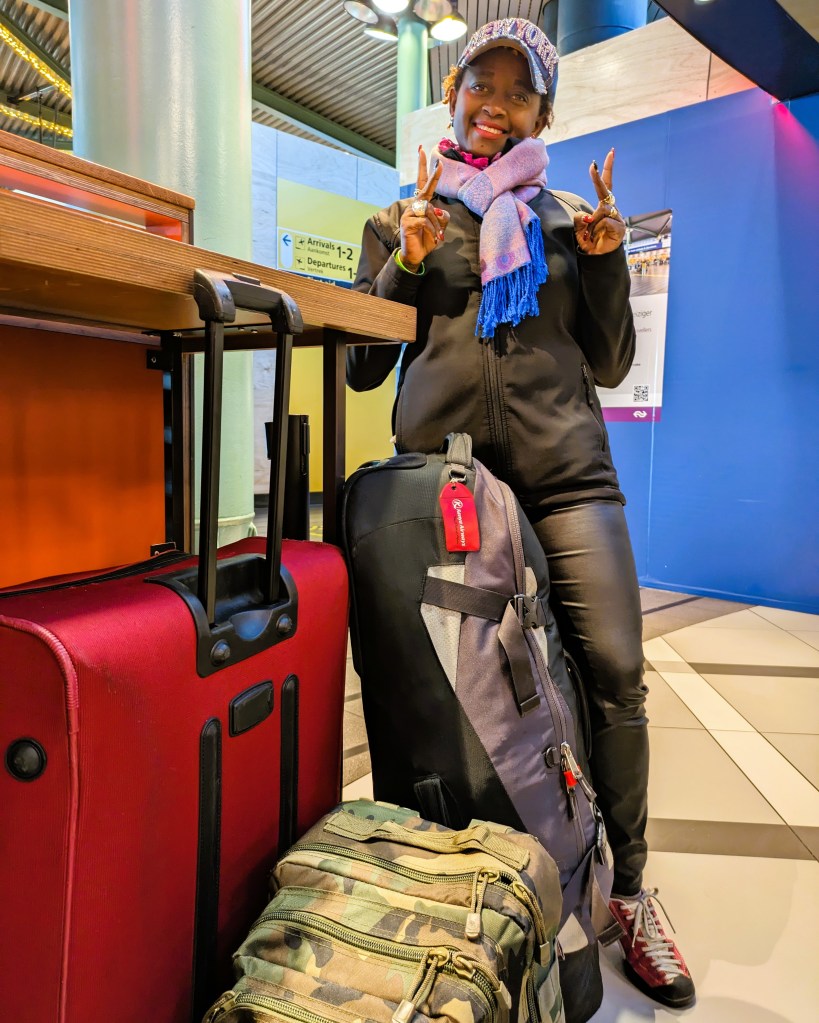
My lovely people, in your life there are always moments you need to travel from your home, whether this is for family visits, holidays or work related. We are all travellers.

We do not leave our medical conditions at home, we are traveling together, and so is our medication. So, when you know your travel dates, what is the first thing that comes to your mind? Is it the excitement of packing your bag, check your outfits, mesmerising over the things to do when you arrive?

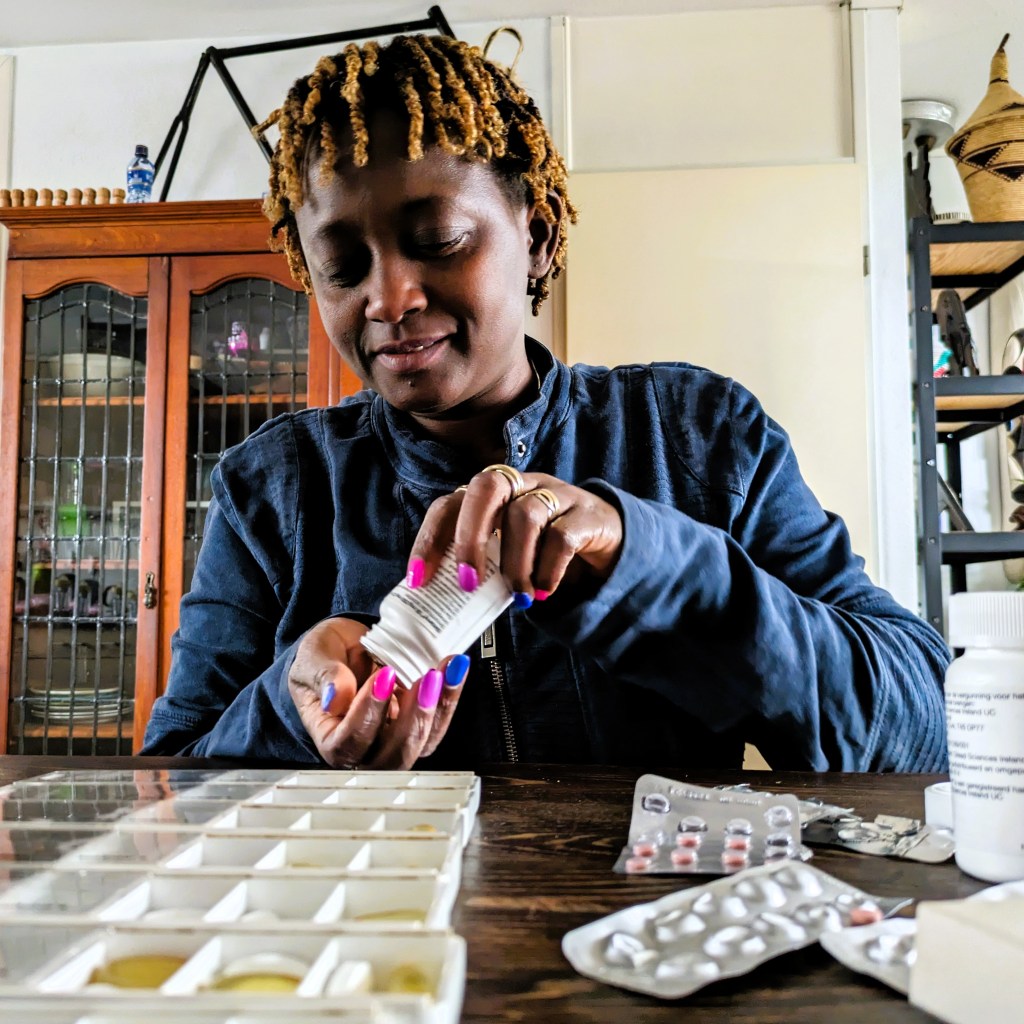
My first thing is to check if I have all my medication, and here comes the hardship. When you take only 1 pill a day it is easy to count what you need. But imagine when you live with co-mobidities and you have 4, 5 or more medications to prepare? And if you will be gone for a month or longer?

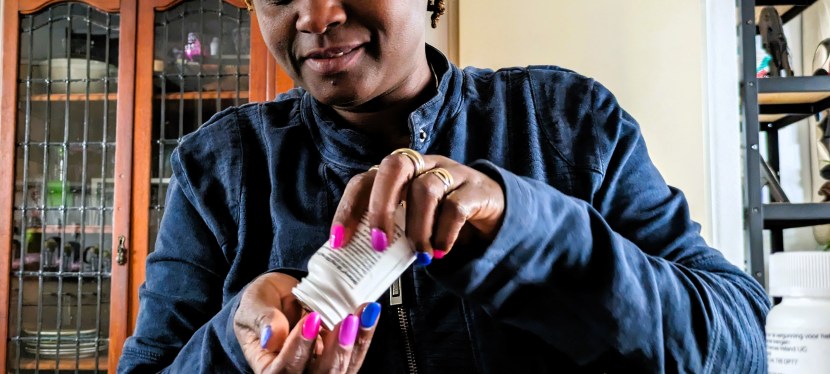
This is not easy, but it is my reality. I do this many times a year, so I developed a certain routine, especially when I go for a longer period. First of all, I always make sure to memorise the looks, shapes and colours of my meds, I even know the size and colors of the packages. That way I know what I take and what I need for my travel. And I am blessed for not taking so many pills anymore since my Healthy new Me lifestyle. Then, once I know that I will be traveling, I will call my pharmacy well in advance and ask them to provide me with a stock of at least 3 months of meds.

Here in the Netherlands, a few days later I will get an email that my meds are ready for pick-up. Then I will go as soon possible to pick them up and do a very careful check at home. Because, although they said everything is ready, my experience has taught me that they sometimes substitute med for another med with maybe the same function but from another brand and composition.

Unfortunately, many times I need to go back to the pharmacy to sort out what happened. And often I get the same response, that a certain type of pill is not available and that it will take a very long time to deliver and that they decided for me to take an alternative.

To be honest with the pharmacy, I cannot even blame them too much because they are actually instructed by insurance companies to prescribe alternatives because the insurers refuse to pay for certain brands as they are more expensive. But the thing is the pharmacy doesn’t inform me about this change beforehand. And I tell you, this changing of meds without informing me has already gotten me in trouble a couple of times as some of the alternative meds gave me all sorts of allergic reactions!

So today I am preparing my journey, and again I realize that meds are missing. I finished to check in with them just now, only to hear that it is not available and it will take many weeks to be delivered. As usual they proposed an altenative, but luckily I already know I am allergic to these meds and was pretty sick for a few weeks when I took it the first time a few years ago. So I totally panicked because I must take this medication to regulate my blood pressure. The pharmacy now did their search and came up with an alternative. As it literally takes weeks I now must take this new meds and I can only hope there will not be any serious reactions while I am travelling!

It does worry me sometimes how often I need to stand between the pharmacy, health insurers and my healthcare providers, to make sure they make the right decisions around my medication. Memorising names and apperance of medication and counting doses can be a pain in ass when you are doing it a lot, and there might come a day that I can’t do it anymore. What will happen then? I am sure I will find a solution. Time alone will tell and with my positive spirit nothing is impossible!

Being an avid traveller, I do have extra exercice and motivation to stay adherent and loyal to my medication. Otherwise, how can I enjoy holidays or work abroad when I am not healthy?

My dear person dealing with double trouble (or even more) morbidities, don’t think of winding down or discoving new places before dealing with the pharmacy and insurers for your med. Prepare them well in advance, don’t forget to take your medical passport and make sure to check the time zone of the country you are visiting to adjust your medication schedule.

Those are things I always checks before I start my travel.

Me and and my meds are inseparable!

Peace,

Eliane

Invest in women

My lovely people how have you been? I was visiting my beloved country in January and part of February this year. While visiting many places and interacting with many people, I realized the incredibly important place that women have in Burundian society.

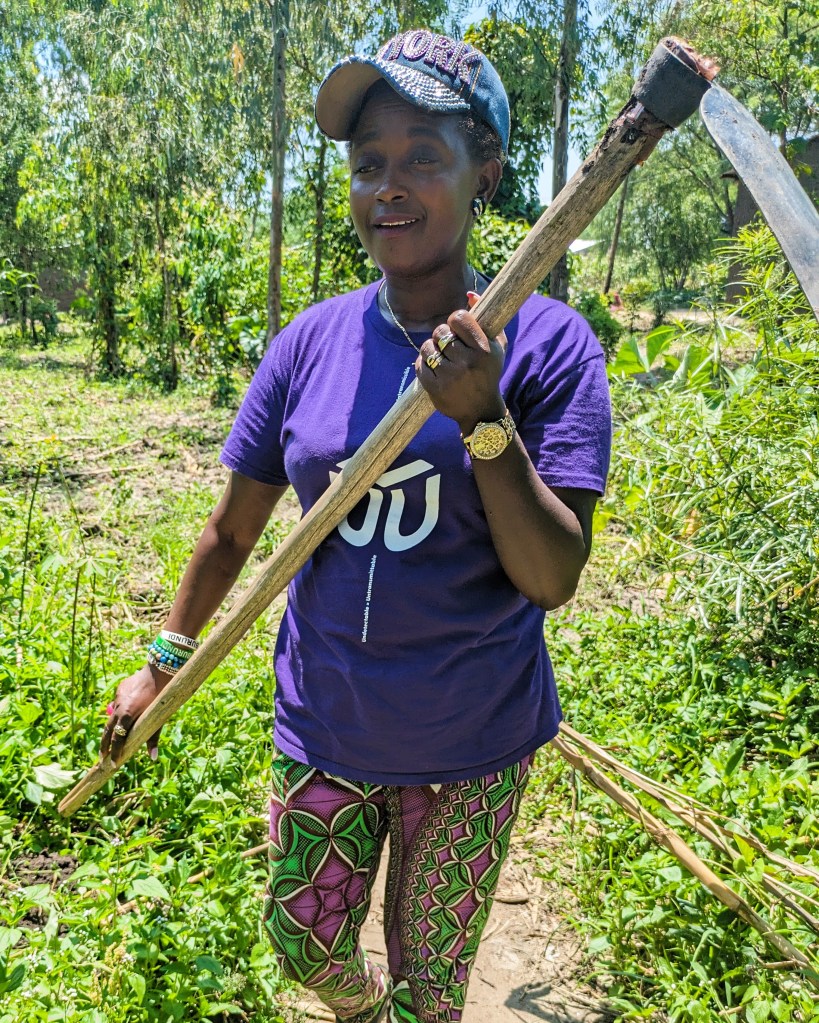
We contribute so much to society; Early morning, even before breakfast time, women can already be found on the lands as farmers and when they are finished they will be making breakfast for their family. Just imagine, while for many of us the day hasn’t even started, many women in Burundi have already worked for three hours or more!

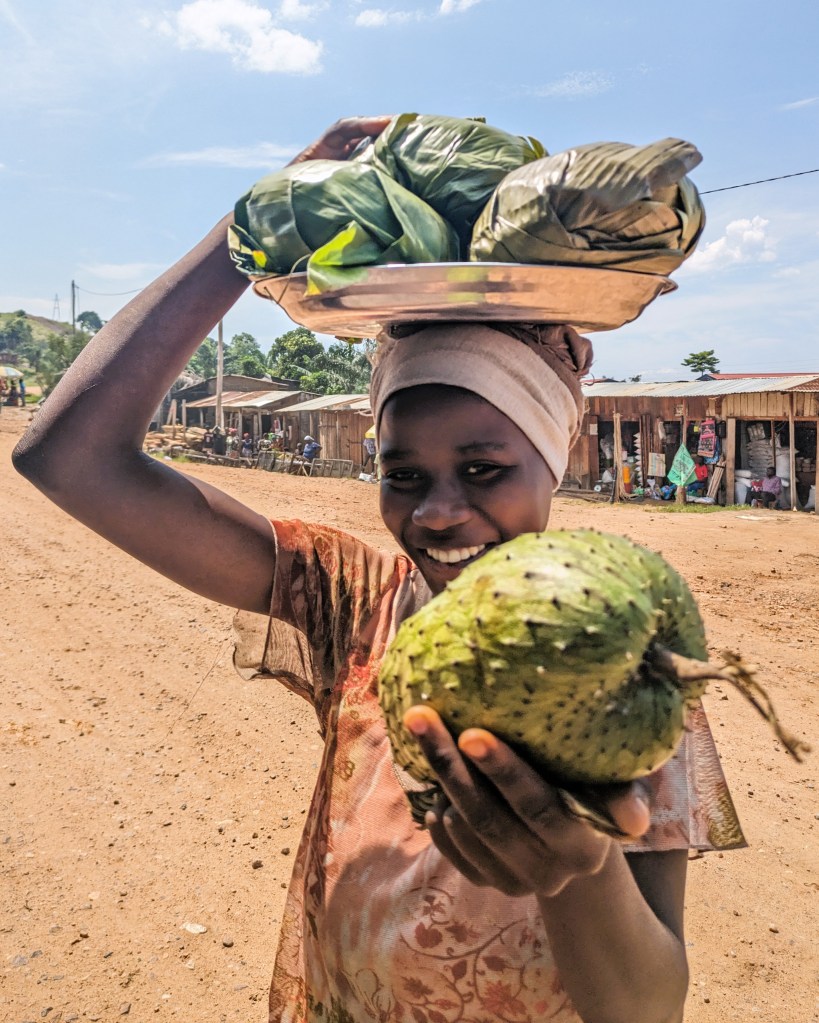
Walking the streets and markets of Burundi you will notice that most street sellers or market stall owners are women. They work hard to sell fruits, vegetables, fish, clothes, etc. They sell hair extensions on the streets and apply them to customers. While working, they will often take care of their kids, holding them on their backs or allowing them to play on the street.

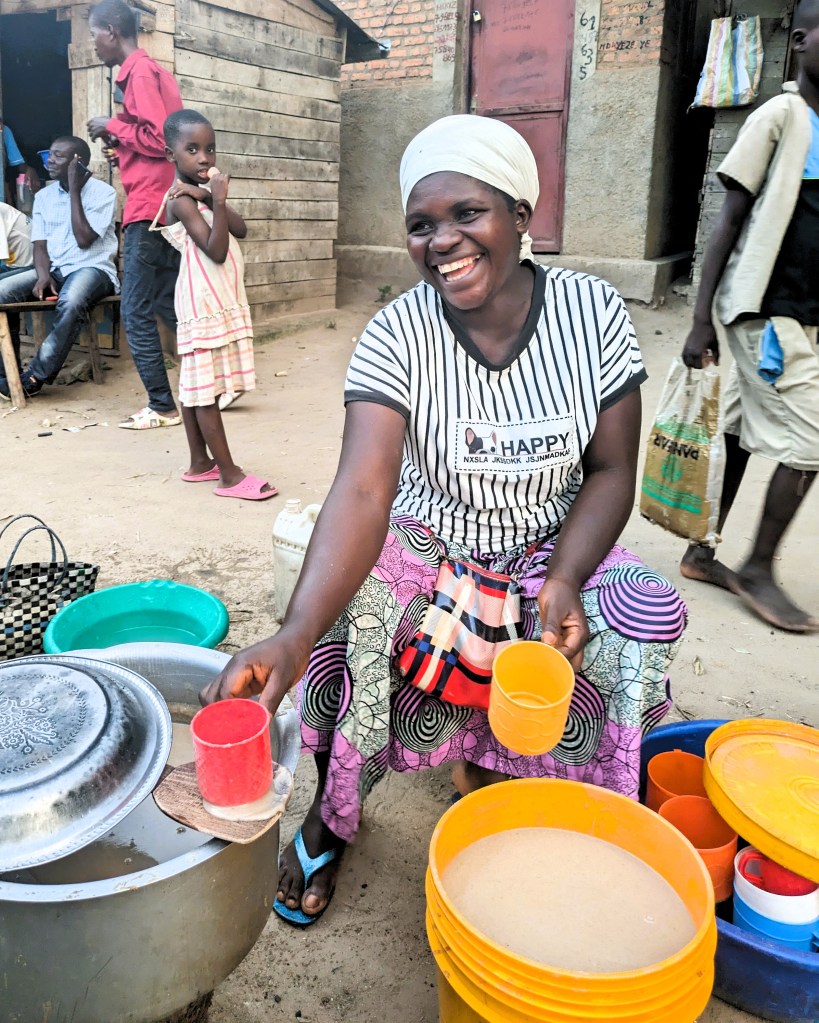
Jeanine selling porridge

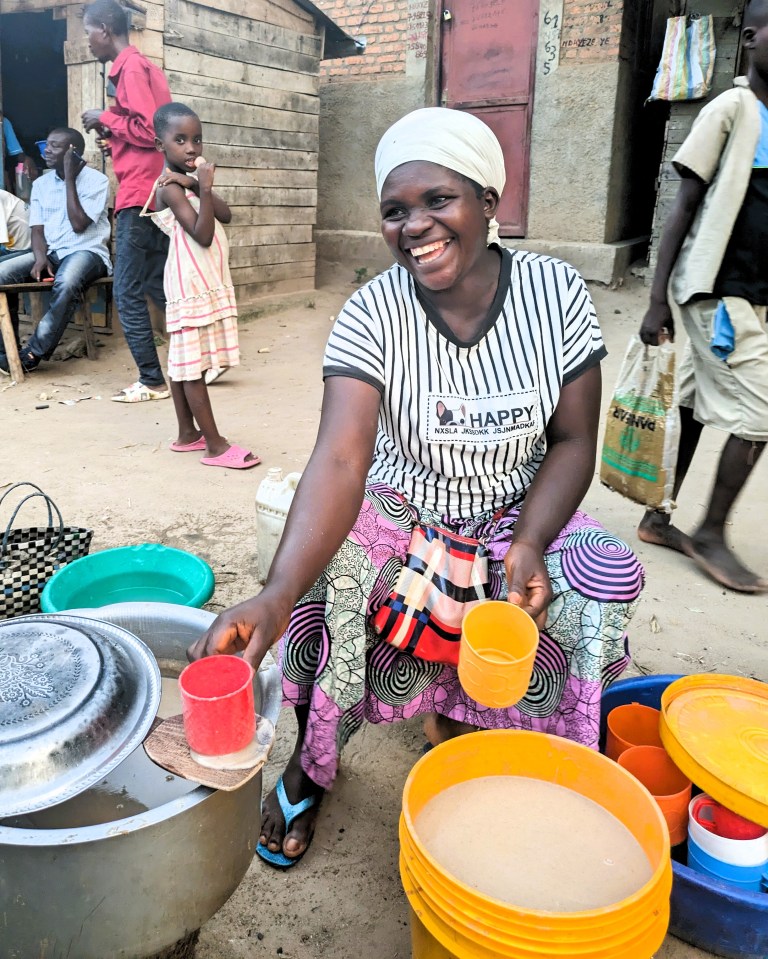
Meet Jeanine, a cheerful woman of Gihanga, selling porridge on the street. While enjoying her porridge I had an opportunity to chat with her, so I asked why she sells porridge at the end of the day instead of the morning when most of us eat our porridge. She replied that during daytime she is working on the fields as a farmer. Then, at the end of the day she makes time to sell her porridge to people who cannot afford to eat in a restaurant.

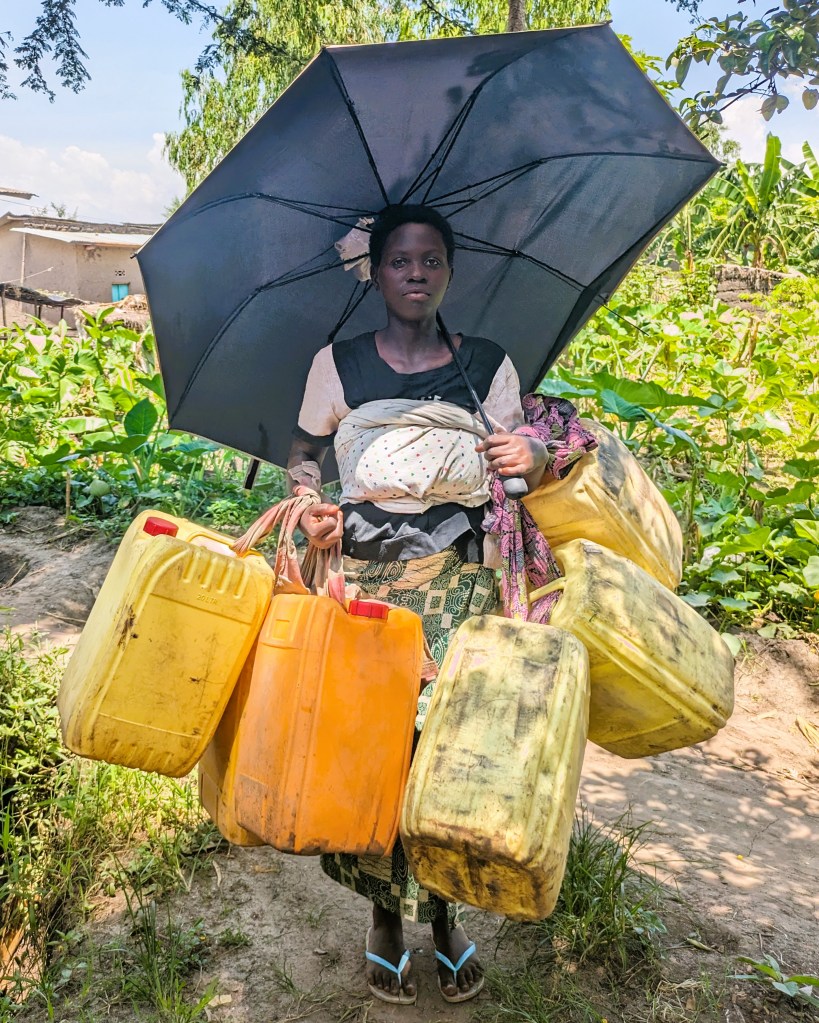
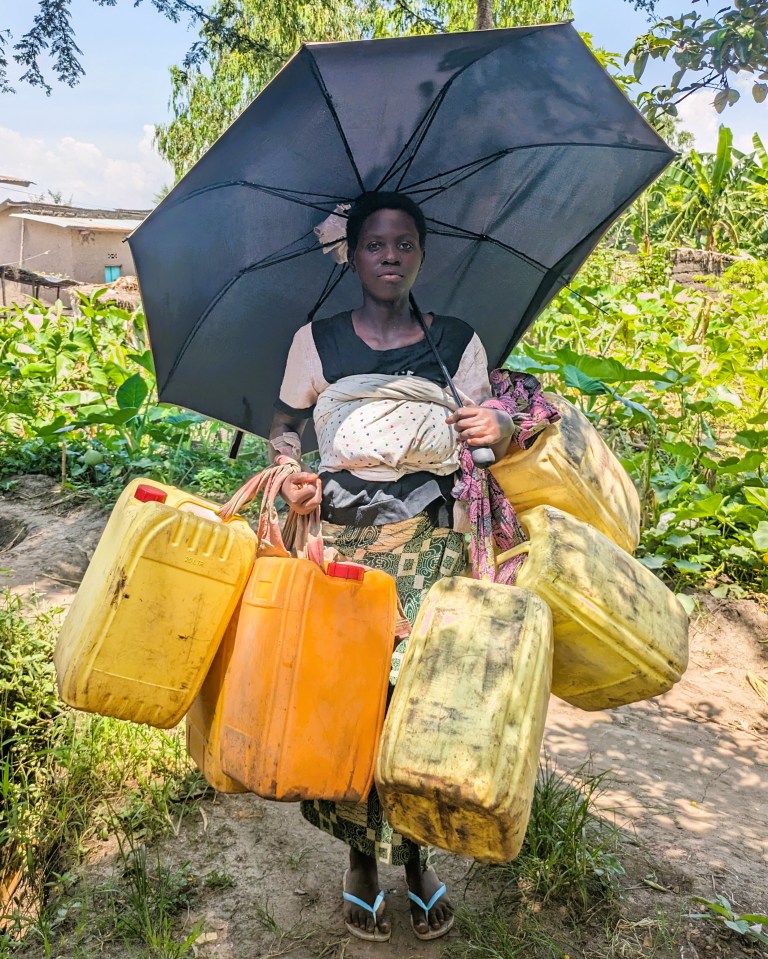
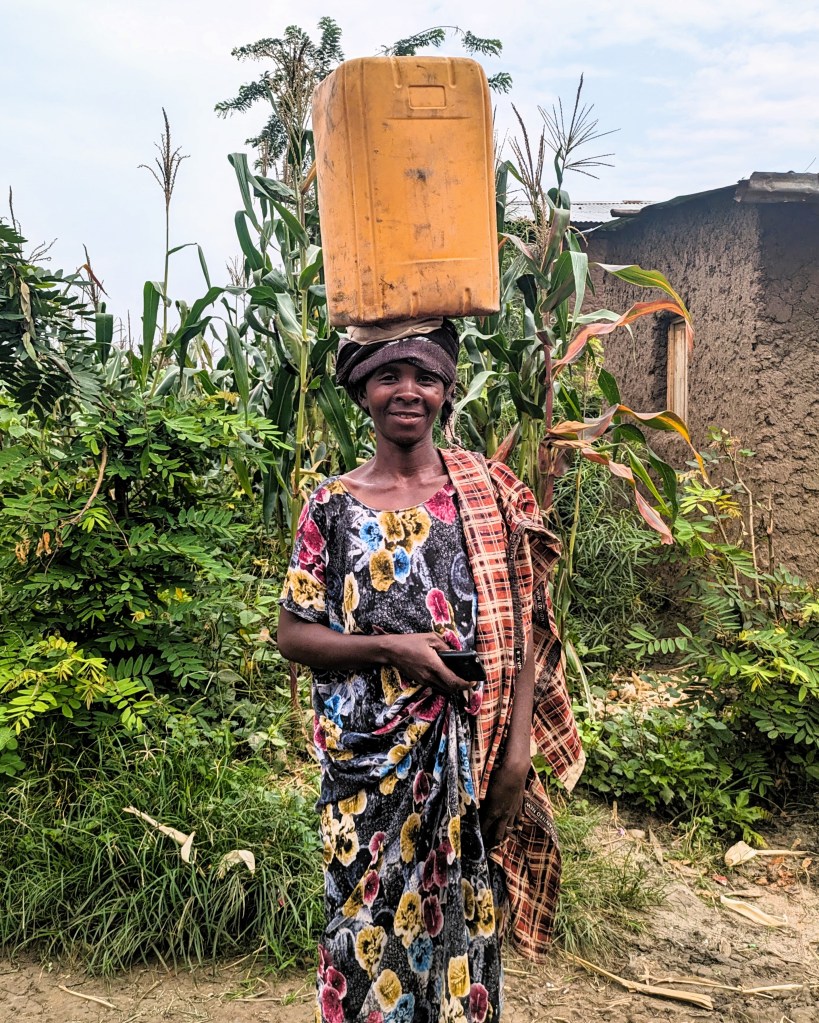
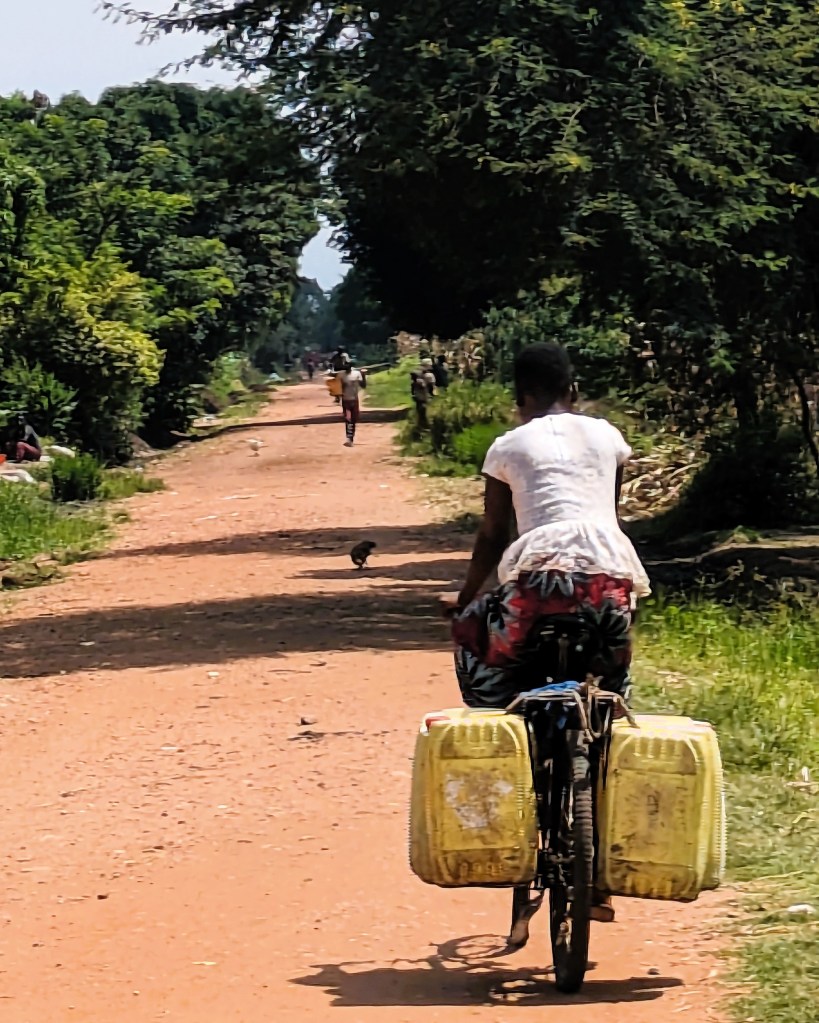
Renata is another great example of how a women contribute to a healthy society. In my hometown Gihanga access to clean water has been a problem for ages, even when I was young! Many women and girls walk or cycle for over 8 kilometres to fetch clean water for their family to drink. So, Renata was just starting her cycling journey, taking 6 containers of 20 litres each with her, while also taking her baby on her back. It does not matter how far or whether it is a hot or rainy day, this is what she must do to keep her family healthy.

Renata on her way to fetch water

And if you think that Jeanine and Renata can wind down after a hard day of work, do not forget they will also be cooking meals for their family or selling a few small things in front of their doorsteps in the evening. They are real centipedes (maboko igihumbi in my language). Women like Jeanine and Renata understand the important role of women in Burundian society. They know their contribution to maintain a healthy and resilient family is essential.

Evangeline Ngendakumana from BAWA

With International women’s Day around the corner, another shining star woman that I want to praise for her courage and dedication to fight for the rights of vulnerable women in Burundi is Evangeline Ngendakumana, the Executive Director of BAWA (Burundian Association for Women in Action). You can read more about the great work of BAWA, including on health & HIV prevention, in my previous blog. Always working hard to support so many vulnerable women and forge their equality in Burundi, she and her team are a truly great example of why we should accelerate investing in women like Evangeline and grassroots organisations working on women’s health & HIV prevention like BAWA.

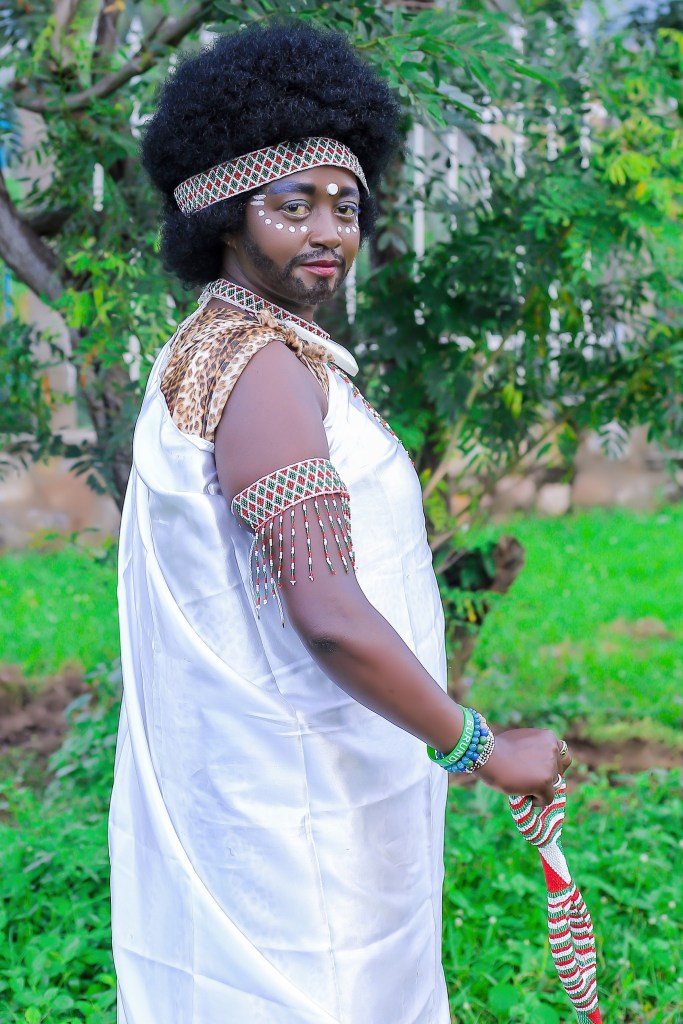
Eric the Dragking

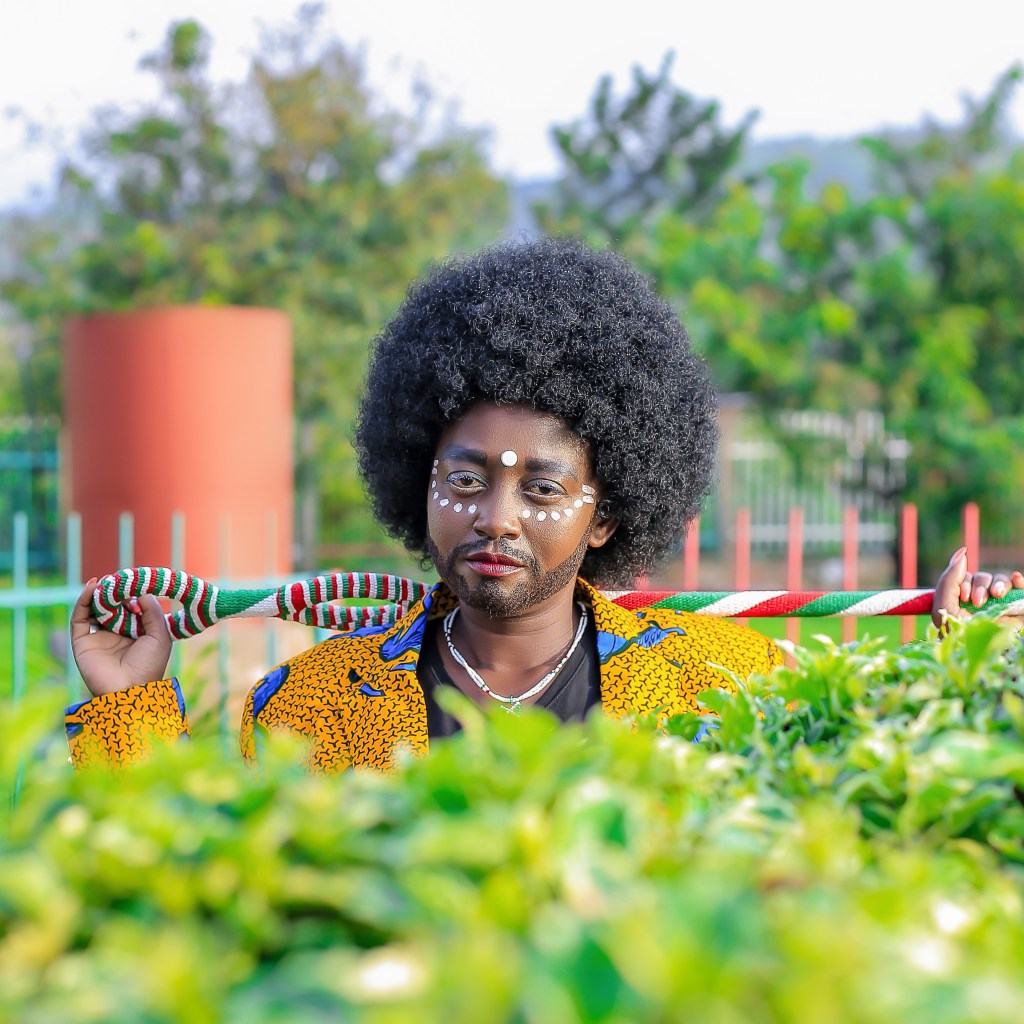
Lastly, as a Burundian woman myself, I hope I am also proudly contributing to empowering Burundian women and forging equality through my drag art as Eric the Dragking. Burundian women have many talents and we don’t need to stick to those men determine us to do. 23 years ago when I played the indonongo, a traditional instrument, as the first woman ever, I was told that it was only meant to be played by men. Today it has become normal for women to play the indonongo. We can do many things, the world is out there, let us discover it.

To those Burundians women who try to make a difference in our country and work hard for their families and contribute to Burundi’s economy, I salute you!

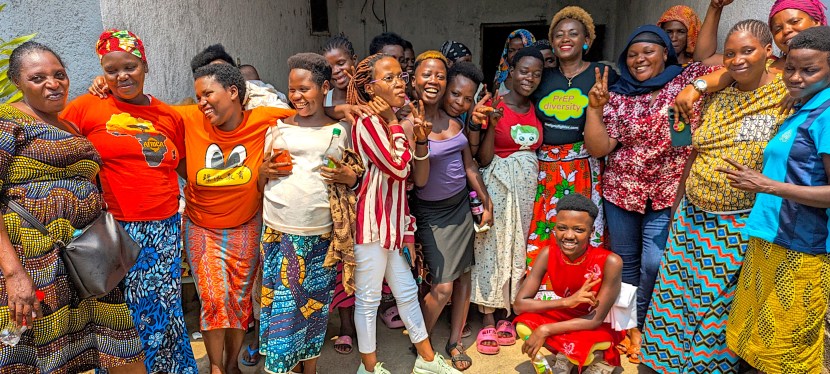
If you want to see some more women of Burundi contributing to a healthy society scroll down below for a slideshow…

Peace,

The proud Burundian,

Eliane

Put women first!

My lovely people,

The talk of ending HIV and AIDS has been going for ages, are we really going to end HIV and AIDS by 2030? To answer this question, we must ask ourselves what actions do we take in our HIV community to put people first? And more importantly, are we making sure to put women in charge?

There is always this inequality. We point it out, we are all aware of it, but concrete actions are hardly noticed. It seems that women are always the last to be thought about while their vulnerability around HIV is so visible. Yet, often we remain silent, indifferent. When will women be saved from this suffering of inequality? When will they not only be spoken about but also put in charge of addressing their challenges related to HIV and AIDS?

This January I am in my home country, Burundi, and my heart is broken when I talk to women in the communities. For example when I talk to a mother with child abandoned by the father, homeless women with children, or young girls begging on the street. Many of these women have no means or support network to take care of themselves and their children.

Put women in charge of HIV response!

Some women resort to becoming a sex worker. This is not without danger, many of them are still sleeping on the streets and through their profession or whilst living on the streets there is a high chance of them being raped. Some told me that happens at least 3 times per week!

The rights of these women are being violated and need to be supported. No wonder it makes me angry when we shamelessly announce we want to end HIV and AIDS in 2030 while basic rights and needs of these women are not even met yet, or when there is no plan of making PrEP available as a preventive strategy to help these women to protect themselves from HIV. Where are our HIV allies when we need them most?

This month my focus is to initiate the strengthening of community-based groups working with vulnerable women to increase their awareness about health & HIV services and PrEP as a life-saving measure for HIV prevention and stigma reduction.

To make a lasting impact we must work directly with local actors, so I have teamed up with a local organisation called BAWA (Burundian Association for Women in Action). The first thing we did was to make sure we listen. We must understand the societal challenges the women face on a daily basis. And my goodness, they are many!

Many women reported they face domestic violence, some sex workers end up with pregnancy during their work and experience problems to register their children as sometimes they are arrested and have their IDs taken, women sleep on the streets without mosquito nets and suffer from malaria and since they are not registered they cannot get mosquito nets, some are being detained by police and taken to the countryside where they live in places without services, etc. It is very shocking. All of them came to the same conclusion, we need safety and protection!

Distributing condoms

Having talked about these challenges and how they affect their lives, we moved to listening to their ideas about how to improve their situation. And it became so apparent to me that they have really great ideas about how they can create a better future for themselves. For example, many women would wish to have access to PrEP or be able to protect themselves for example through condoms.

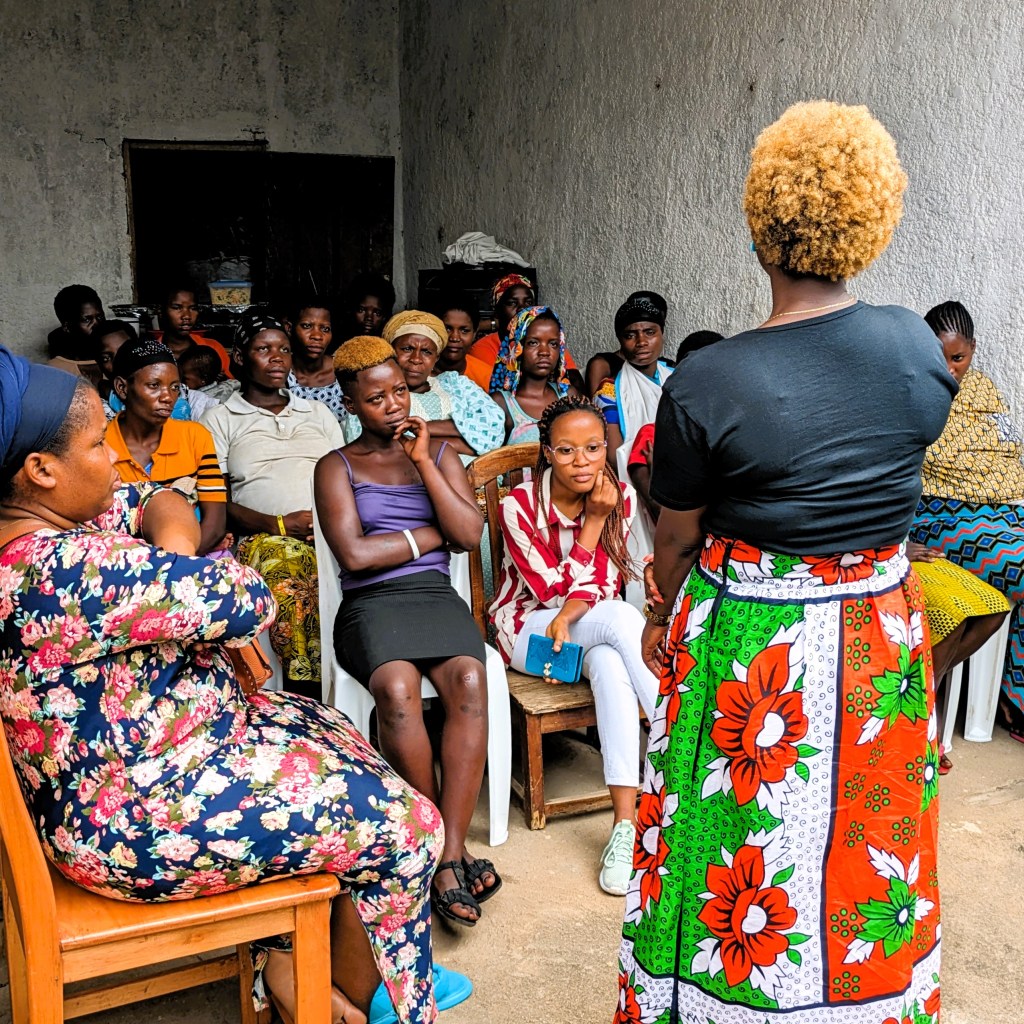
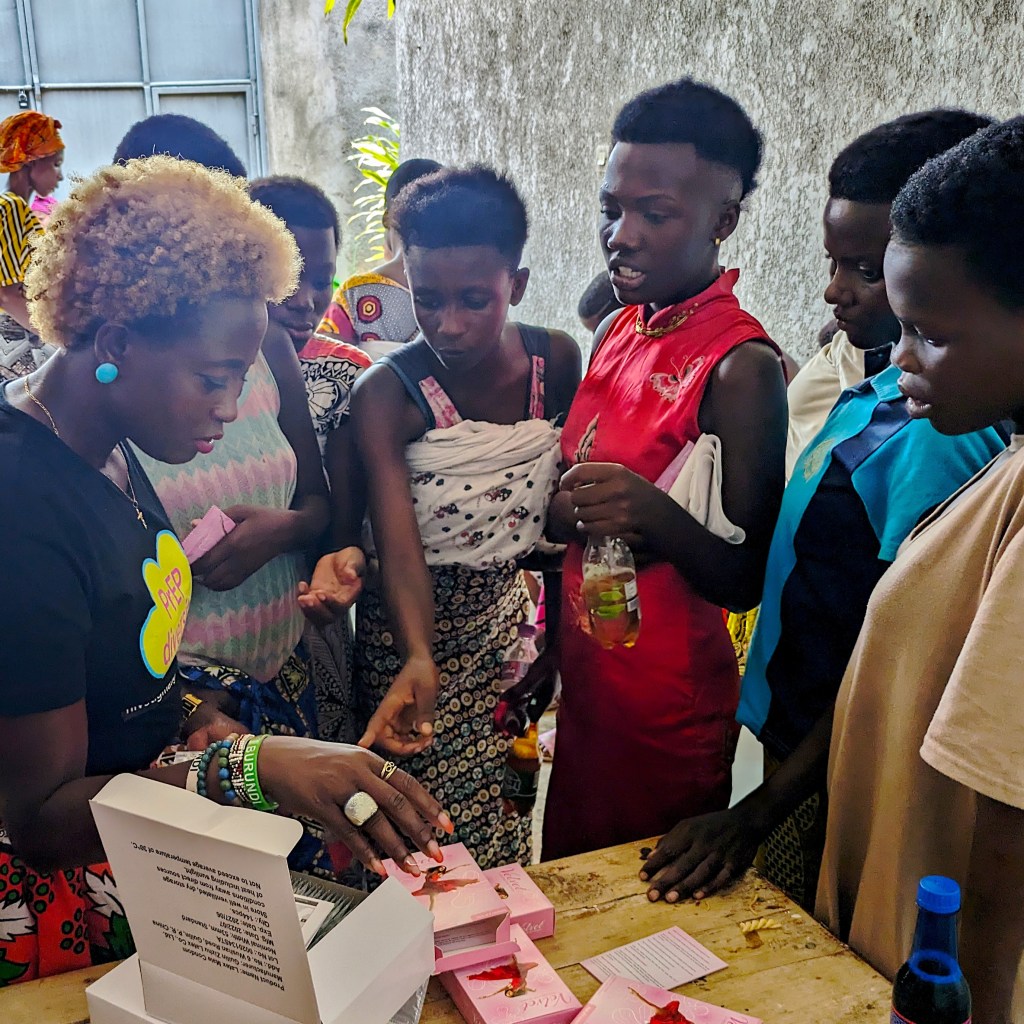
As BAWA works together with others to address the needs of these vulnerable women, we also organised a session together with them to interact with the women of BAWA. We discussed their strategies on how women can stay healthy & safe, and how to seek help when needed. This was also a great opportunity for me to share the latest on HIV prevention and treatment. So, I shared with them a whole range of preventive measures such as the dapivirine vaginal ring , PrEP pill or injectable PrEP. This is a part of the world where I clearly see the need for injectable PrEP as this will positively impact upon the health of vulnerable women. We were also able to make female and male condoms available, and most strongly preferred female condoms because they are a better means for them to protect themselves.

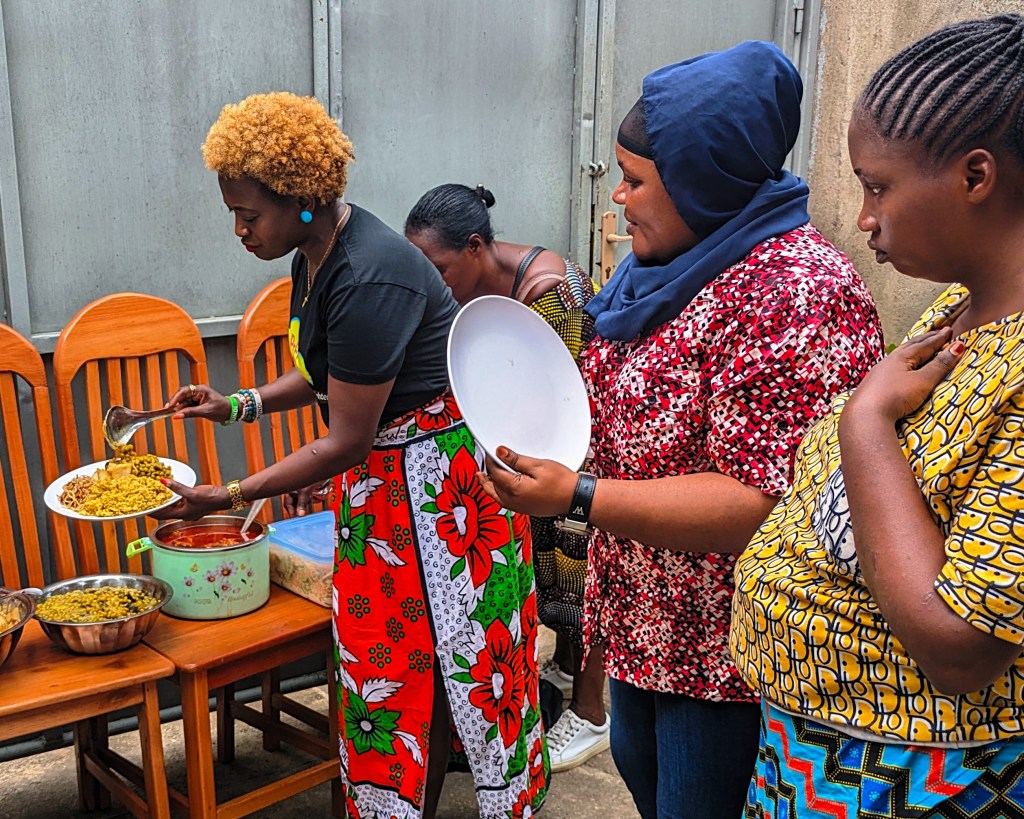
As is customary in our society, to end these fruitful sessions and collaborations in the Burundian grassroots (HIV) community we shared a great lunch together!

If we do not work with organisations such as BAWA and the vulnerable women they represent directly, ending HIV and AIDS by 2030 is an illusion! So, HIV allies pay attention, let’s make 2024 the year to get the balance right and make sure we address the challenges of women in the global South in our fight against HIV and AIDS.

Peace, Eliane

The BAWA support team

Heart

My lovey people,

Many of you know that I love writing poems and that I have posted a whole series of them over time. Getting closer to 2024 is a great moment to use a poem to reflect and to compliment ourselves on our fight to end HIV stigma and discrimination. So here is a nice HIV pozcard for you…

If you are curious to see some more HIV pozcards have a look here. Interested to work with us on another HIV pozcards? Get in touch!

I am looking forward to an exciting new year with lots of wishes of more positive change to our HIV community.

A positive 2024 for everyone! Peace,

Eliane

World AIDS day 2023

Today is World AIDS Day and the theme is “Let communities Lead”.

We have been facing HIV stigma over the past 40 years. While nowadays in many parts of the world people living with HIV can live a healthy and long life as long as they access good health services. At the same time let us not ignore the fact that “STIGMA KILLS” and contines to harm more people.

In 2021 Stories of Hope started as a locally-led initiative in our fight against HIV stigma and discrimination. We now represent a global community of talented people living with HIV and, since recently, our HIV allies. On Stories of Hope they share their stories about breaking HIV stigma. Today we are very proud to introduce our fabulous Hero of Hope Luis Noguera as they share their incredible fight against HIV stigma.

Thank you Luis!

Read more about HIV Stigmafighter, the driving force behind Stories of Hope.

With us NOW!

Hello my lovely people,

Today we are celebrating World AIDS day. Being part of the HIV community I try to contribute in as many ways as possible to fight HIV stigma and discrimination. So as HIV Stigmafighter you can see me connecting and speaking up digitally and physically, globally and locally.

This year’s theme is ‘Let Communities Lead’. As regular readers know, in previous blogs I have been pointing out how important it is to be part of thriving local communities and making sure that our achievements are shared and celebrated at the global level as well to continue inspiring eachother in our fight against HIV stigma and discrimination.

I am very proud of my close connection to the Irish HIV community. My first contribution as HIV Stigmafighter to the Irish community was last year when I was part of a photo exhibition on people living with HIV, organised by Steven Doyle, joined Robbie Lawlor’s and Lady Veda’s Pozvibe podcast, and attended the HIV Ireland conference.

Fun at the Pozvibe podcast with Robbie & Veda
Ireland here I come (Photo: Sil-Hong Won)

Today I am proudly joining the Irish community as Eric the dragking ‘a colourful black ray, stomping stigma away’ at the famous The George nightclub in Dublin! Being part of this amazing entourage already earned me the title of Irish talent.

On stage I am excited to join artist and activist Luis Noguera which is a very special moment as Luis is also our newest Hero of Hope on our Stories of Hope platform. Please read Luis’ touching story of overcoming HIV stigma and shame!

Luis Noguera (Photo: @ciarangildea)

To me these past two year of working with the Irish HIV community to fight HIV stigma in so many creative ways is a very good example of how local HIV communities should lead our global drive to fight HIV stigma. We need our partners to seriously listen to us to make sure that addressing our challenges, ideas and solutions are made core in global and local HIV action.

Peace,

Eliane

Positive power

My lovely people,

Have you ever had a dilemma where you had to choose between what is best for you as a person or for us a HIV community? Last week I had to make such a choice. While getting ready for the 19th European AIDS Clinicians Society (EACS) between 18-21 october in Warsaw, Poland, on the 13th of October my sister died in Gihanga, Burundi.

So, I was torn between dealing with grief and organising the funeral of my sister and representing the HIV community. That was such a hard choice. Deep down, I knew my sister would have loved me to carry on doing what is my passion in life, representing and speaking out on behalf of the HIV community. So, with a broken heart I made my way to Warsaw to meet up with my dear HIV community and our partners.

I realised that we as a HIV community are able to contribute to fighting HIV stigma in so many different ways. Whenever we can we should be…

Speaking out

The 17th of October was an exciting day for me to speak out as HIV stigmafighter at the Stigma and Discrimination Forum which was organised a day before EACS. It was a great moment to point out the persisting stigma in the healthcare system. Thank you Virology Education for giving the HIV community an opportunity to speak out.

Group photo of forum participants and organisers. Photo credit: Krystian Lipiec

Debating

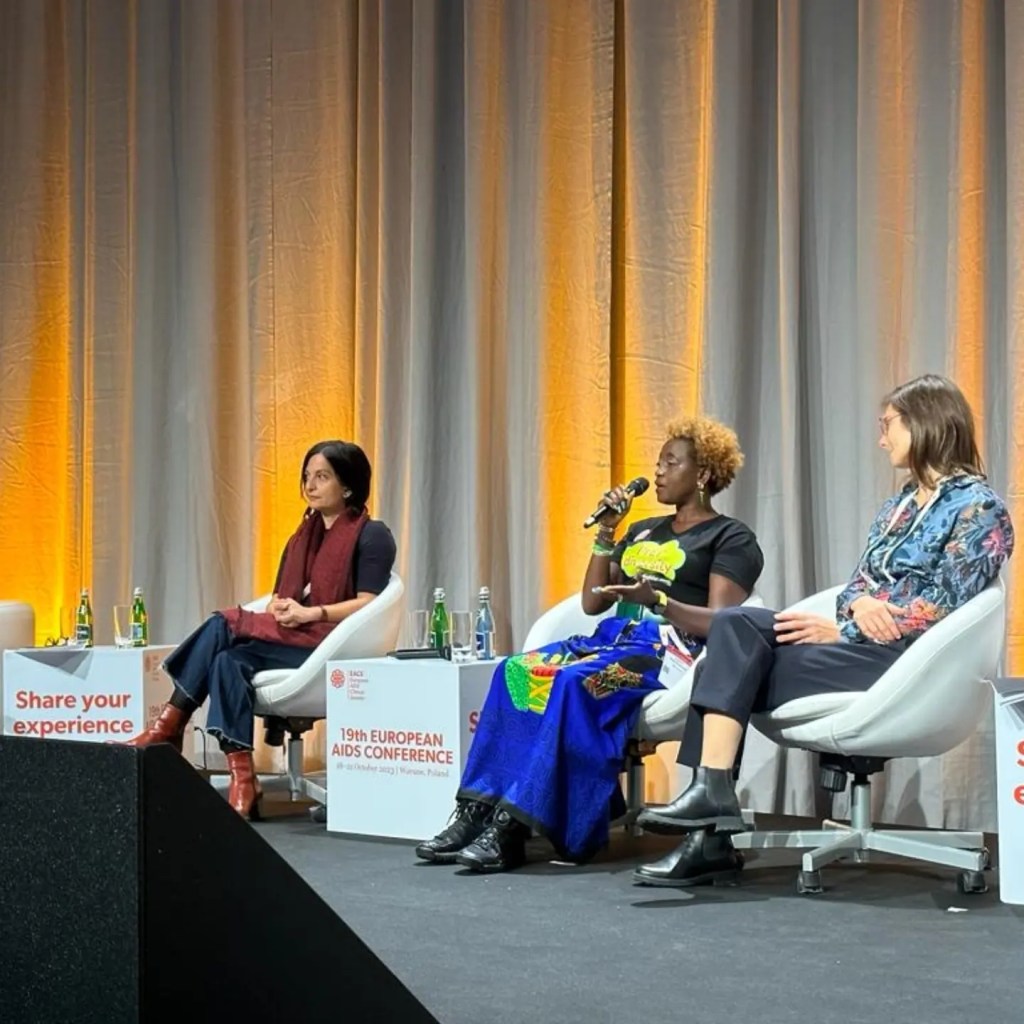
The next day I was a penalist in the WAVE (Women against Viruses Europe) workshop “I am every woman“ where I was representing migrant women living with HIV. I believe that powerful migrant women, open about their status, are key to briding the gaps between the healthcare system and migrant women living with HIV. How else will we improve access to PrEP? Thank you WAVE, for giving migrant women a chance to share their stories and insights.

Debating at the WAVE workshop

Sharing

On the 19th I shared my HIV jounery as a motivational speaker in the ‘community corner’ organized by European AIDS Treatment Group (EATG). I am so glad to see these dedicated spaces where the HIV community can interact with our partners. These are always the most vibrant spaces of any conference!

EACS Community Corner. Photo credit: Steven Doyle

Coaching

My week in Warsaw ended on a very high note! Together with AFEW International, Positive Women and Fundacija HelpNowHub I organised a positive lunch for Ukrainian women living with HIV in Poland. This was a great moment to work together on our dreamtrees and share and discuss our futures of living with HIV. I was truly touched by the resilience of the women I met, it was a very memorable Sunday!

You may have noticed that lately I have been priviliged to engage at different events, such as Fast-Track Cities, Virology Education’s Forum on Stigma and dicrimination and EACS 2023. I am noticing a very positive trend: More and more of our partners see the HIV community as empowered citizens in our global fight against HIV. If together we keep on making sure that our voices are being heard around issues such as PrEP diversity, fighting HIV stigma, growing up positively with HIV, we can bring real change to the lives of people living with HIV.

At EACS 2023 I was able to witness the great work the HIV community continues doing. Together with our partners, we can make the transformation of their work into our HIV community. Without the HIV community there will be no science.

Keep empowering our HIV community and be inspired by us for great positive outcomes!

Thank you sister, peace in heaven,

Eliane